
Current Drive vs Voltage Drive
Animated measurement comparisons across multiple drivers. Watch the distortion disappear.
Every conventional amplifier uses voltage drive — it forces a voltage across the speaker and lets the current vary. This means distortion from the speaker's non-linear impedance feeds directly into the sound.
Current drive does the opposite — it controls the current through the voice coil directly. The result? Dramatically lower distortion, measured across every driver I have tested above low frequencies. The GIFs below alternate between voltage and current drive measurements on the same driver, same conditions. See for yourself. How current drive works, and what these graphs show in numbers, is explained in What Is a Current-Drive Amplifier?
BG20 Full-Range Driver
Visaton BG20 — 8-inch (20 cm) full-range cone driver
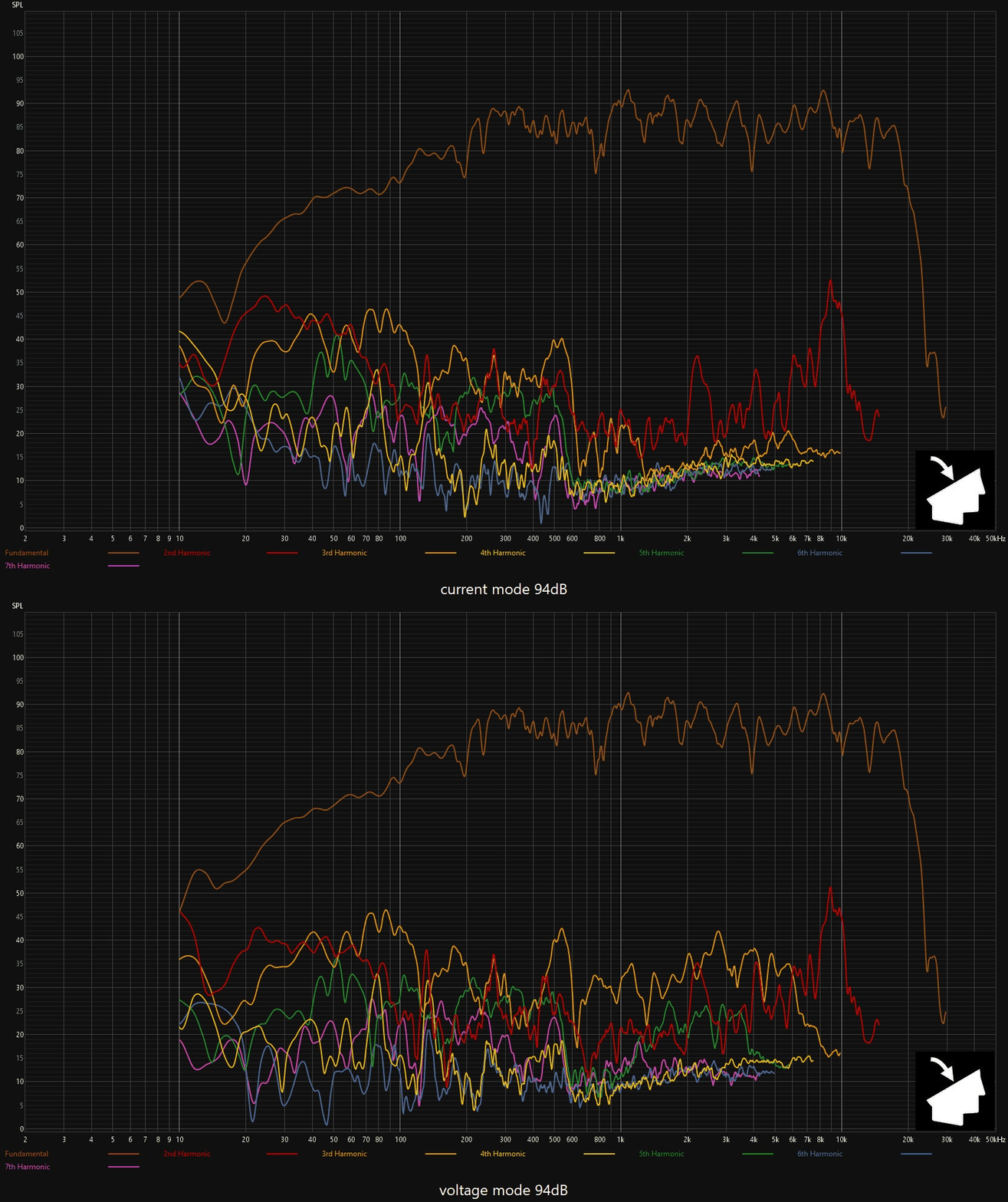
94 dB SPL
Voltage vs current drive at moderate listening level. Watch the harmonic distortion peaks shrink dramatically under current drive.
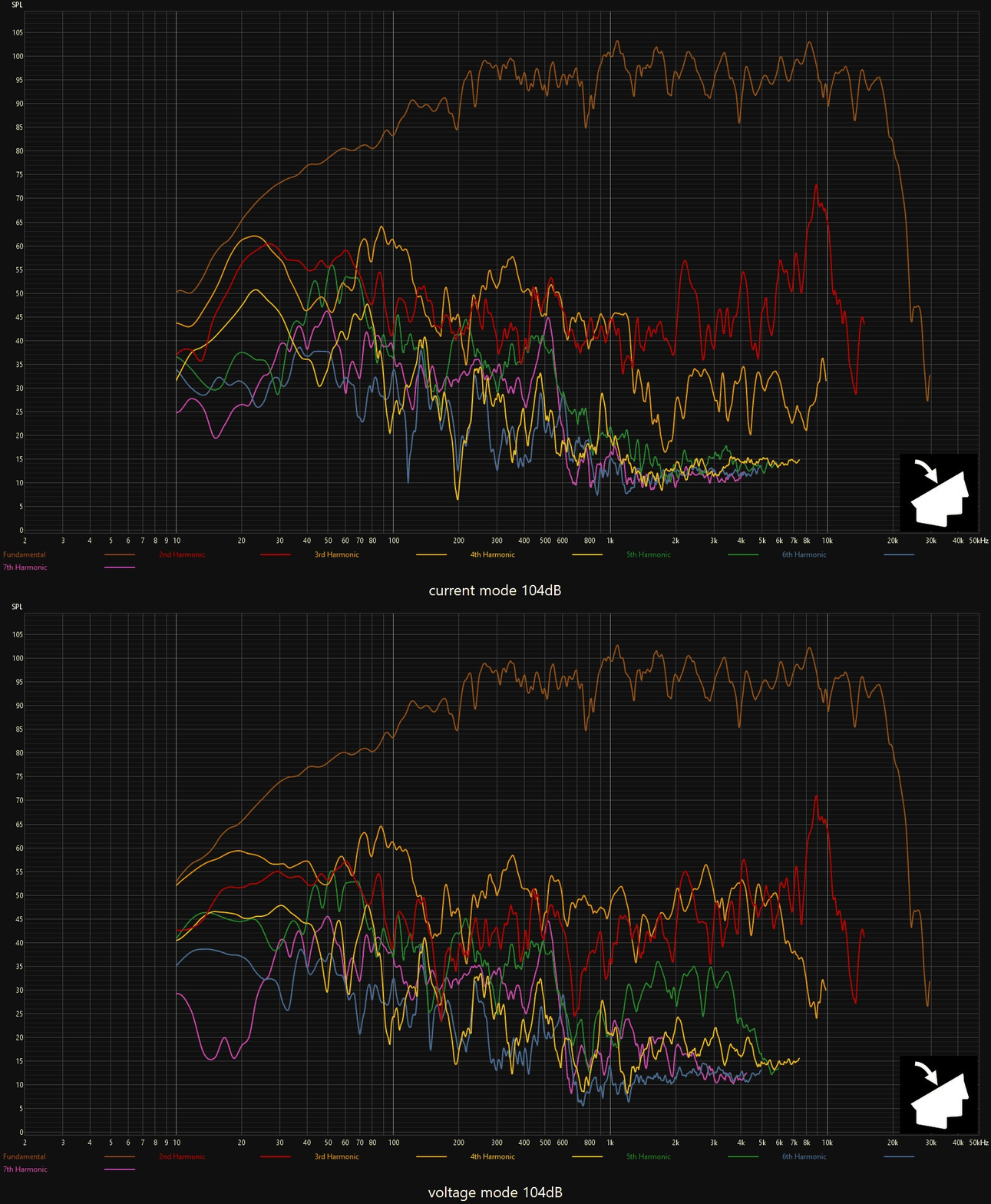
104 dB SPL
Same driver pushed hard — 104dB. Even at high SPL, current drive maintains dramatically lower distortion.
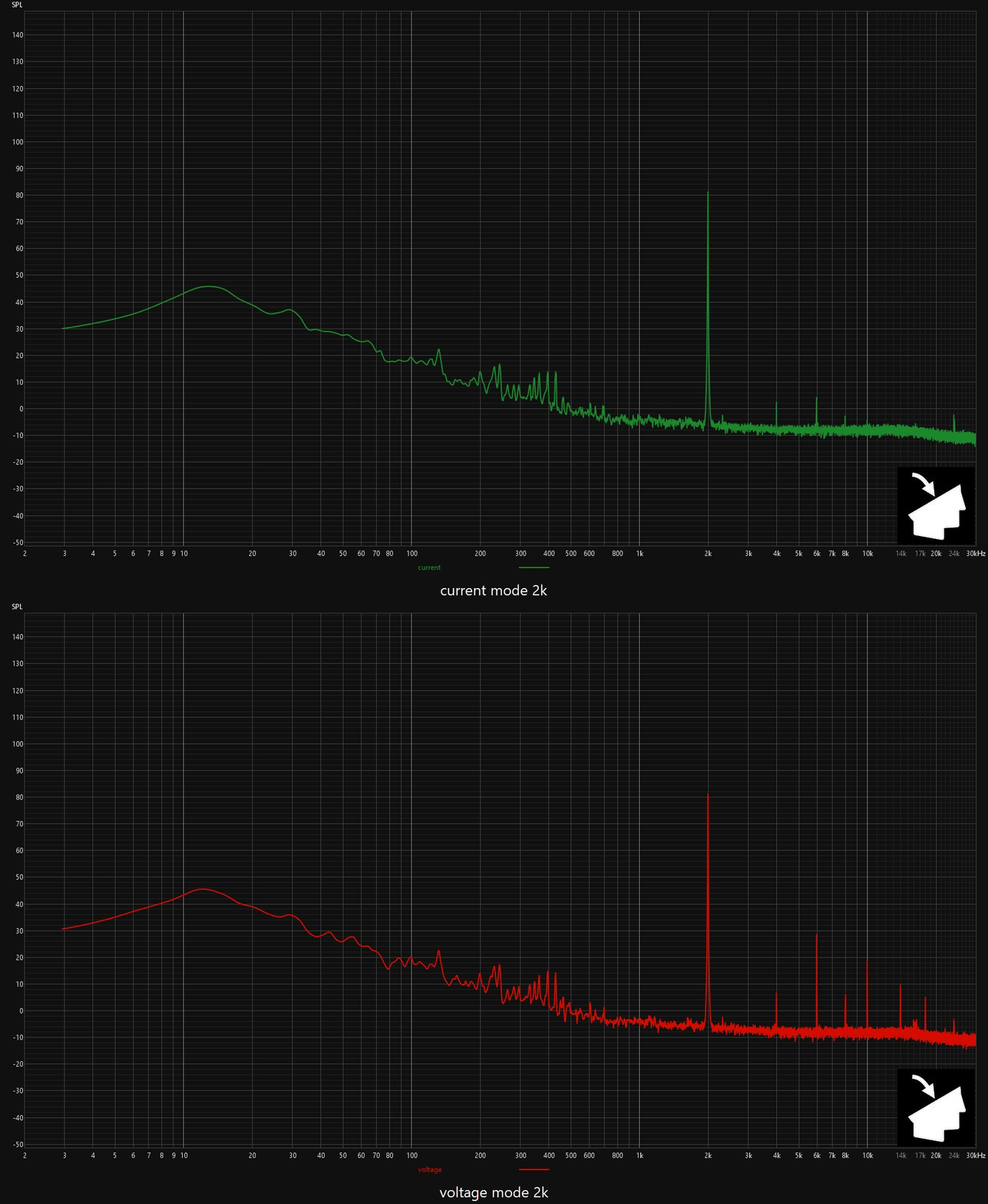
2 kHz Tone
Single tone at 2kHz — the most sensitive frequency range for human hearing. Current drive cleans up the harmonics.
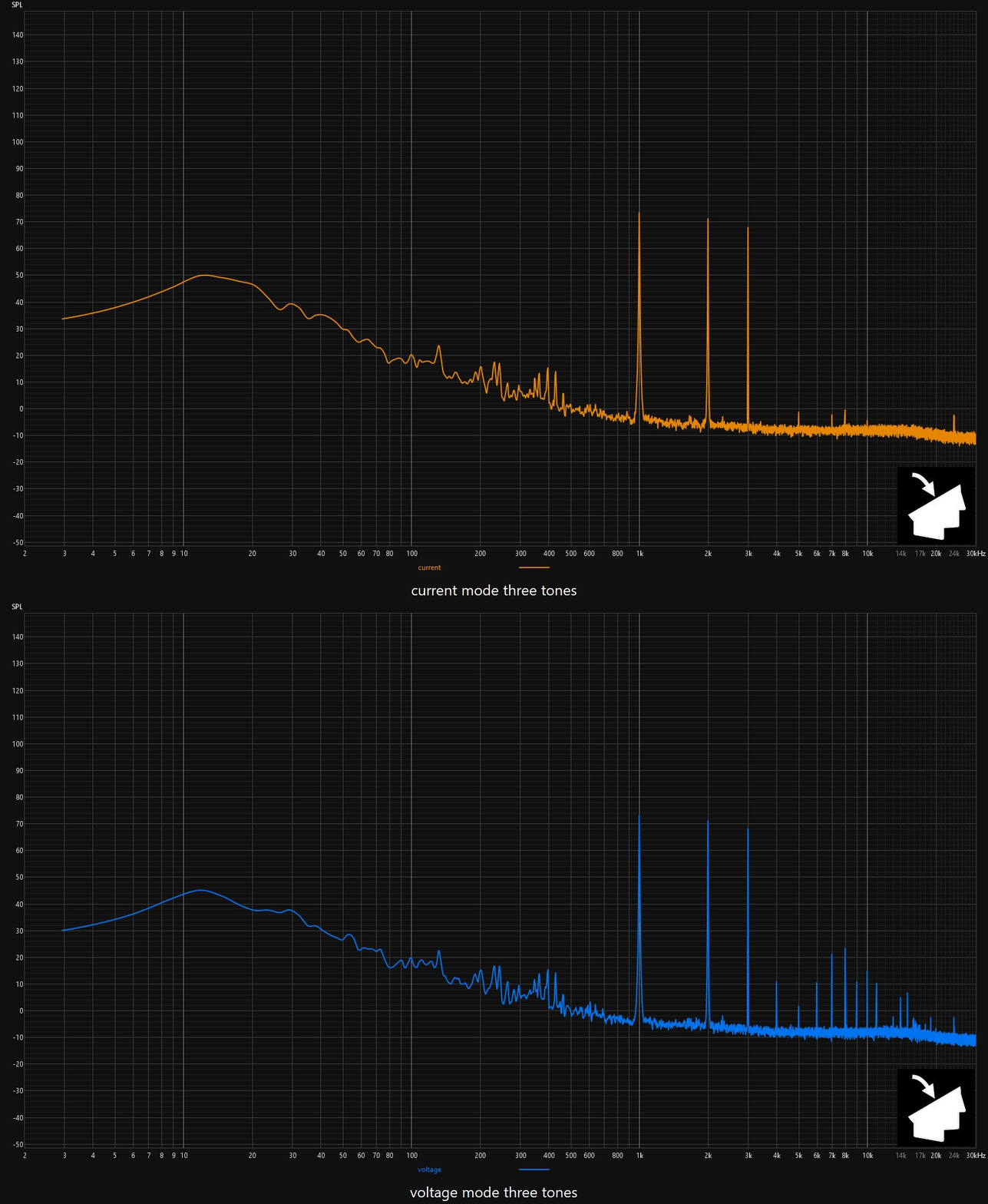
Three-Tone IMD Test
Three simultaneous tones reveal intermodulation distortion. Current drive virtually eliminates the IMD products.
Peerless HDS 830884
High-quality midrange — popular in high-end DIY builds
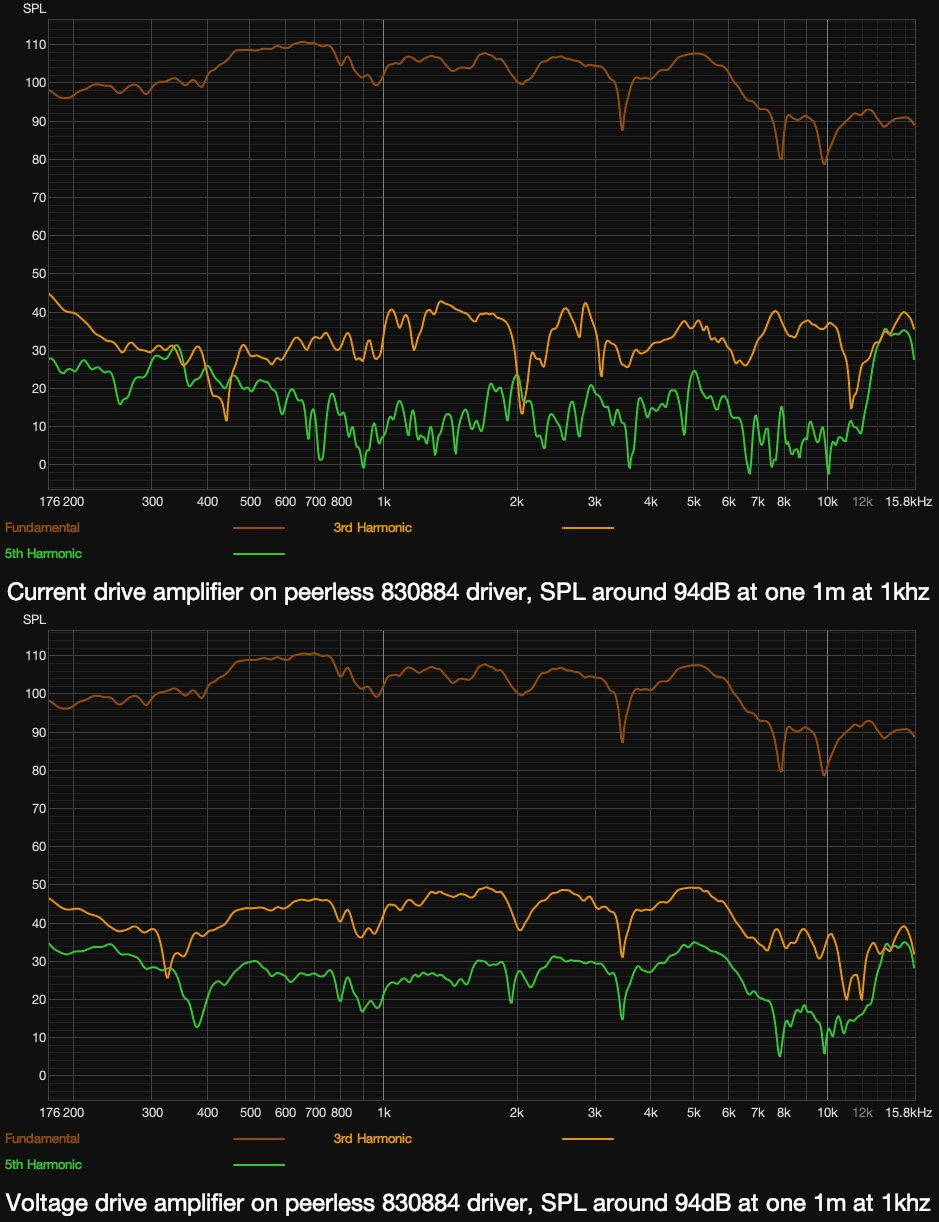
Single Tone Comparison
Clean single-tone measurement showing voltage vs current drive distortion profile.
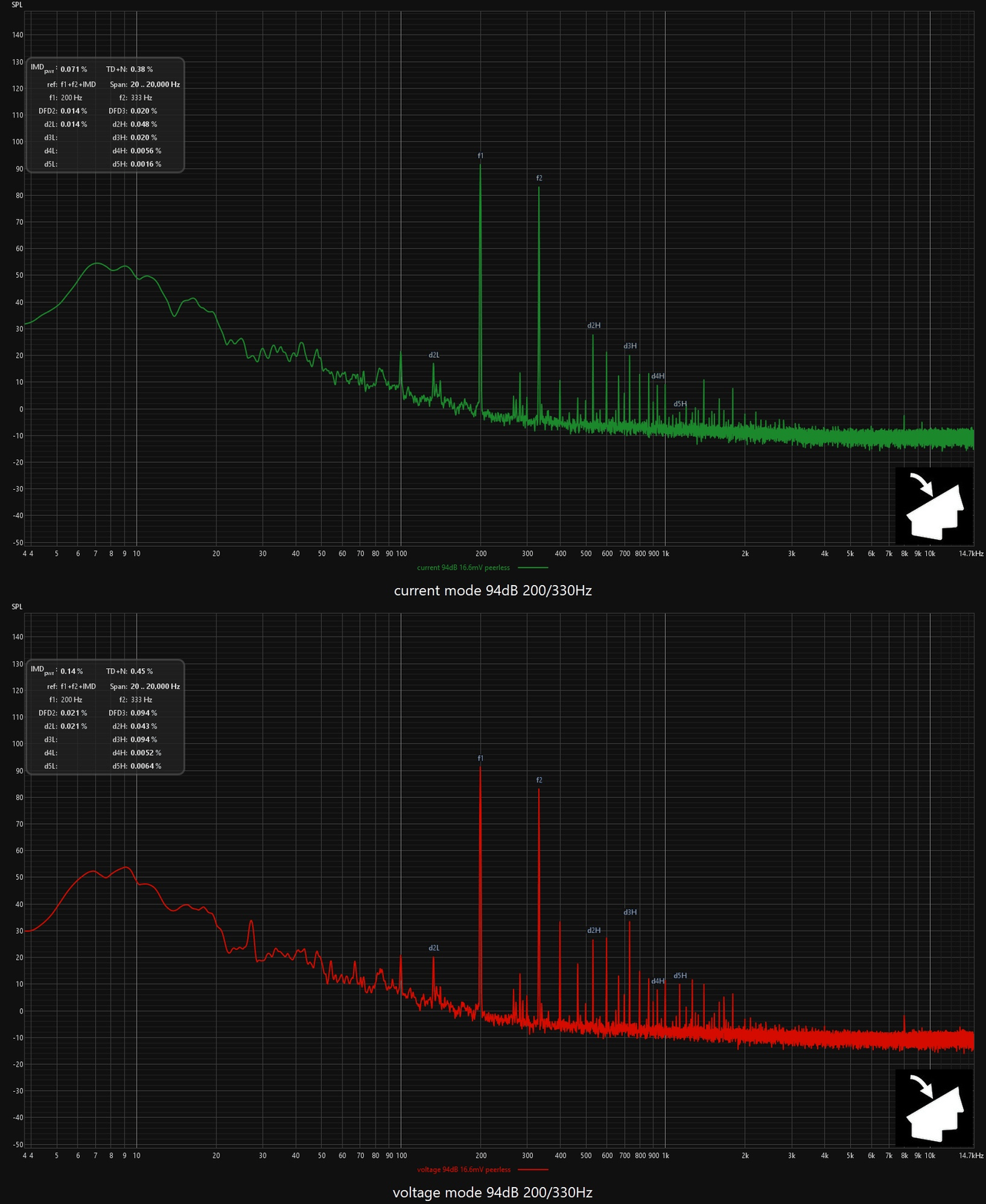
94 dB — 200 & 333 Hz
Two-tone test at 94dB. The intermodulation products under current drive are significantly reduced.
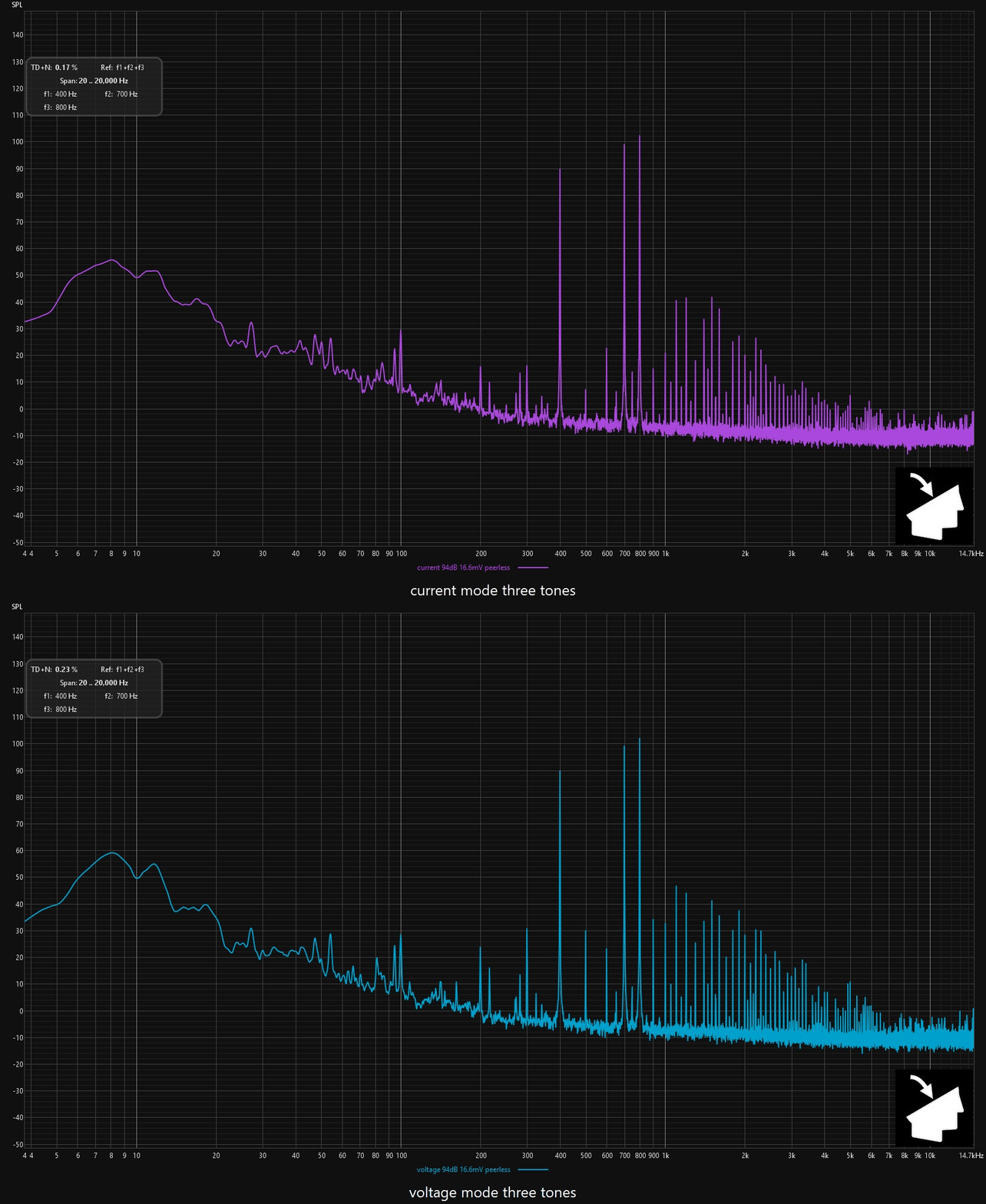
Three-Tone IMD
Three simultaneous frequencies — the ultimate distortion stress test. Current drive wins decisively.
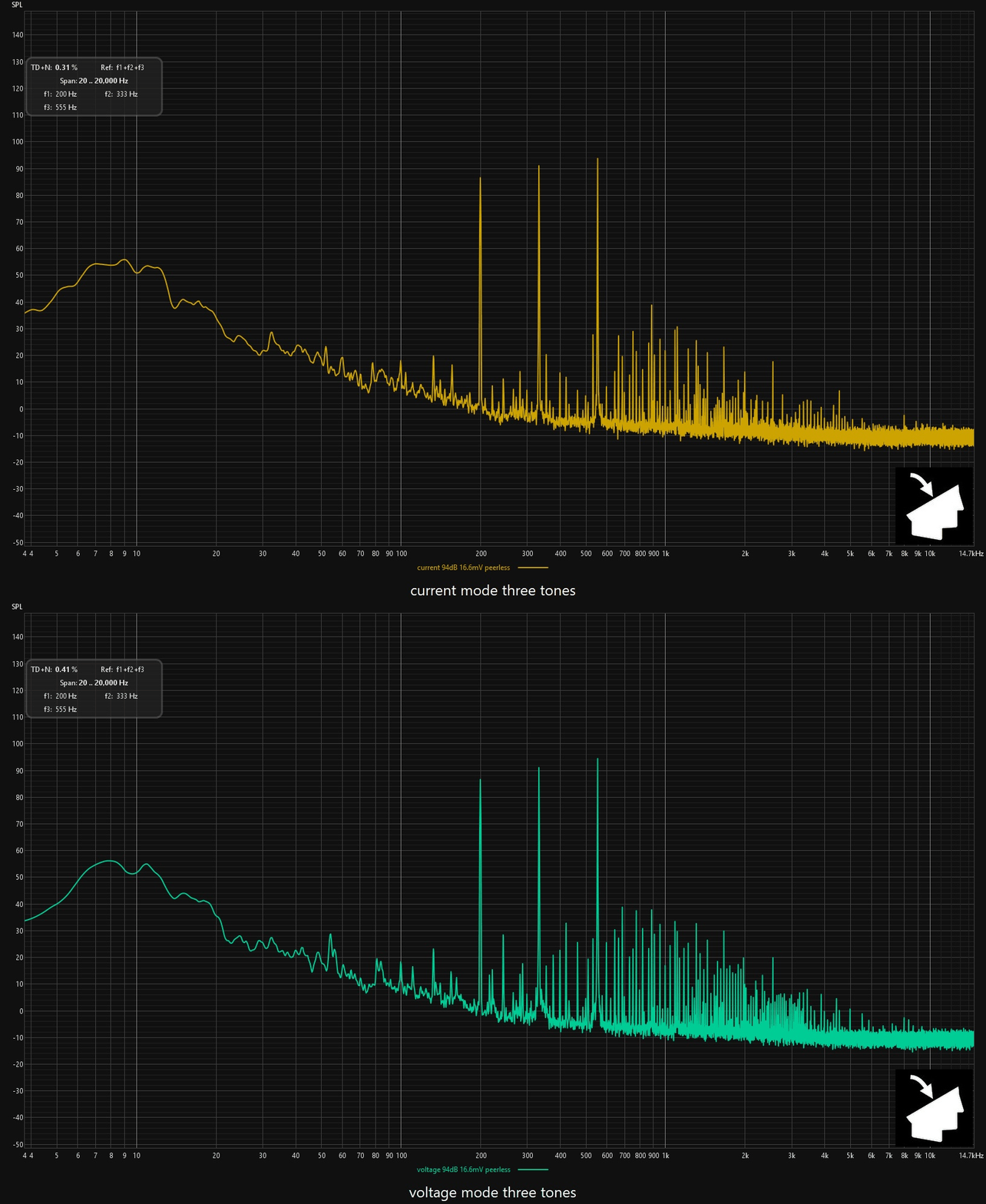
Three-Tone IMD (Variant)
Different frequency combination, same result — current drive consistently outperforms voltage drive.
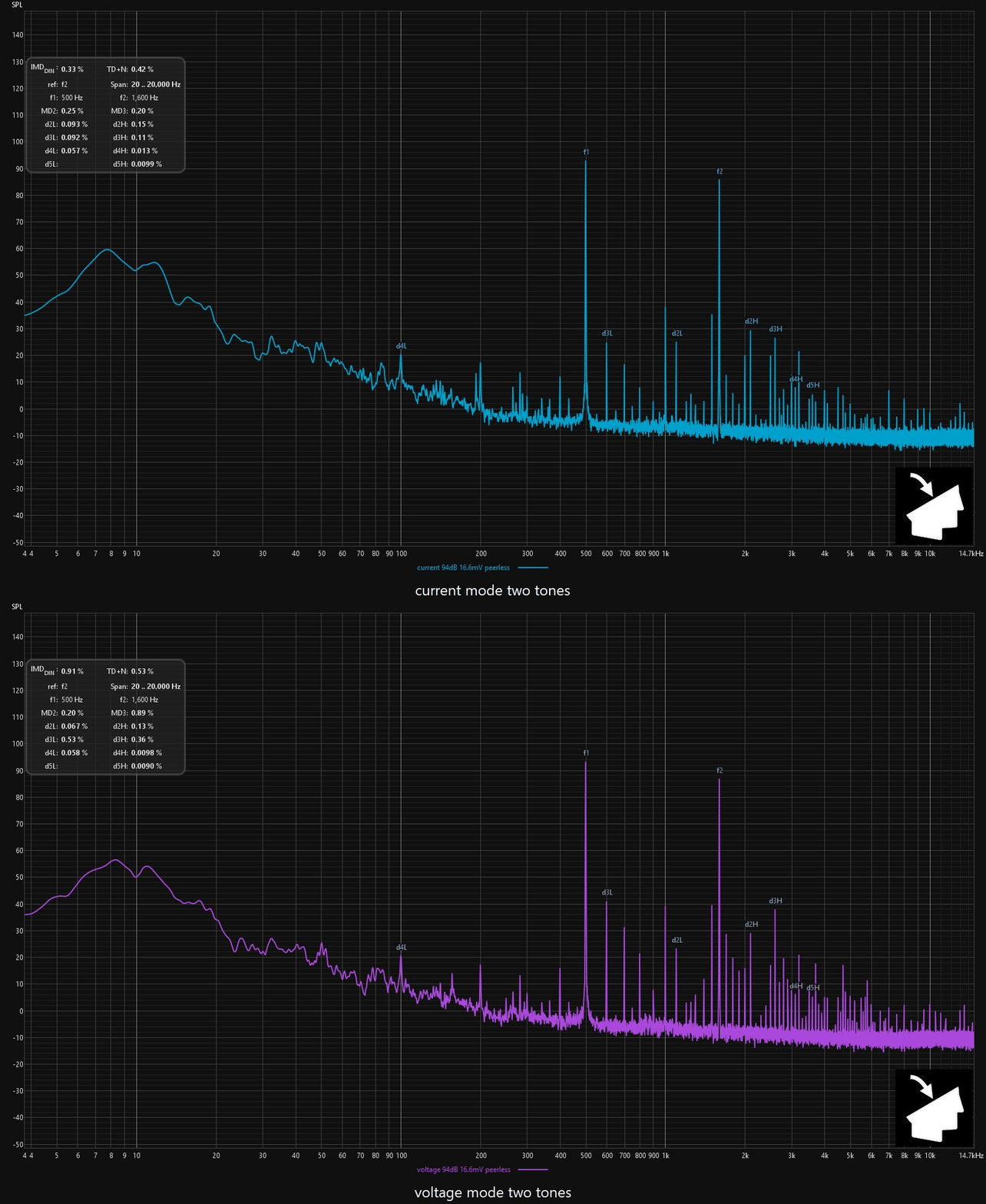
Two-Tone IMD
Two-tone intermodulation test revealing the distortion products that color your music under voltage drive.
SEAS FA22RCZ
Premium SEAS full-range driver
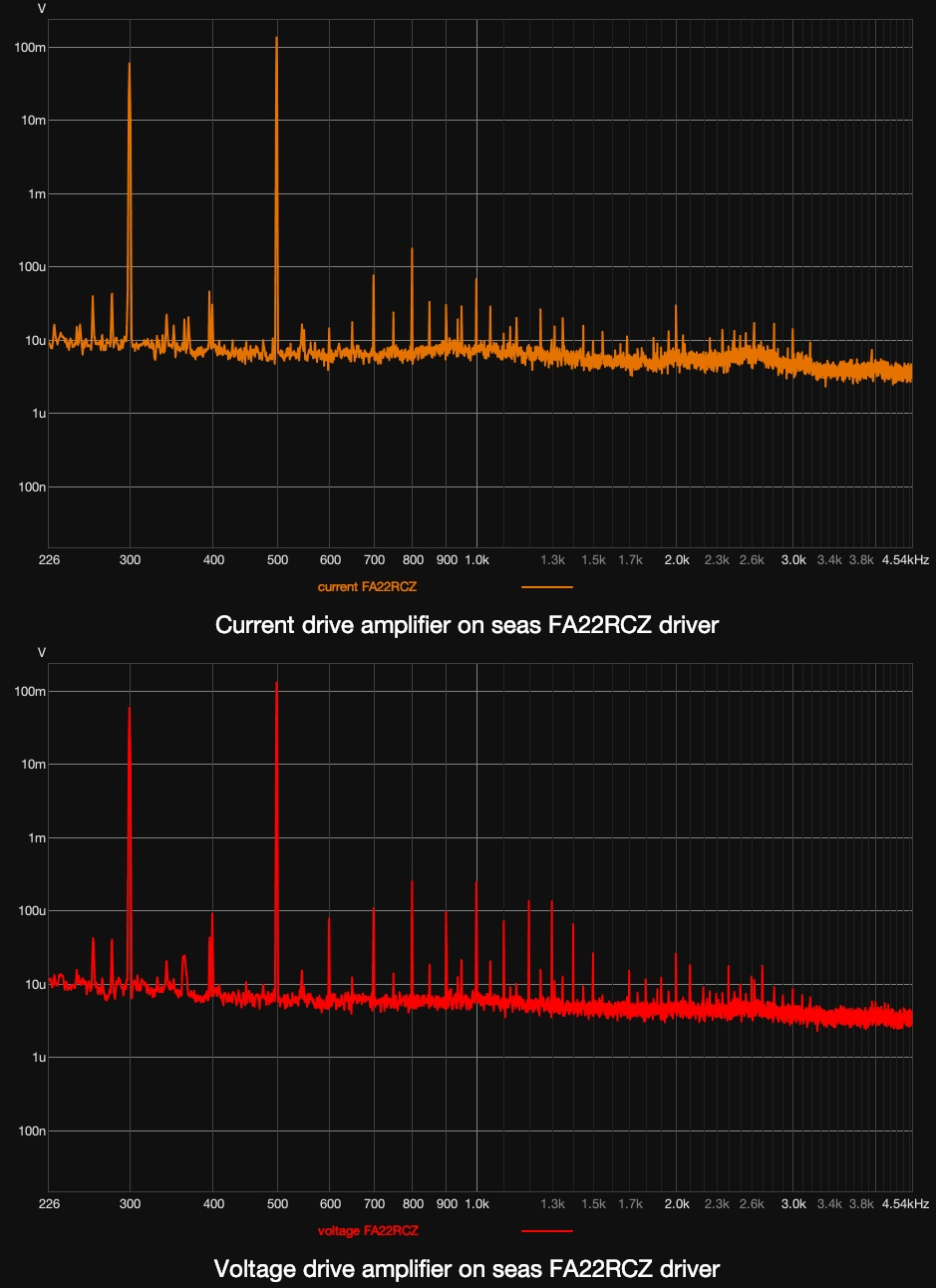
Single Tone Comparison
Even on a premium SEAS driver, voltage drive produces measurably more distortion. Current drive tames it.
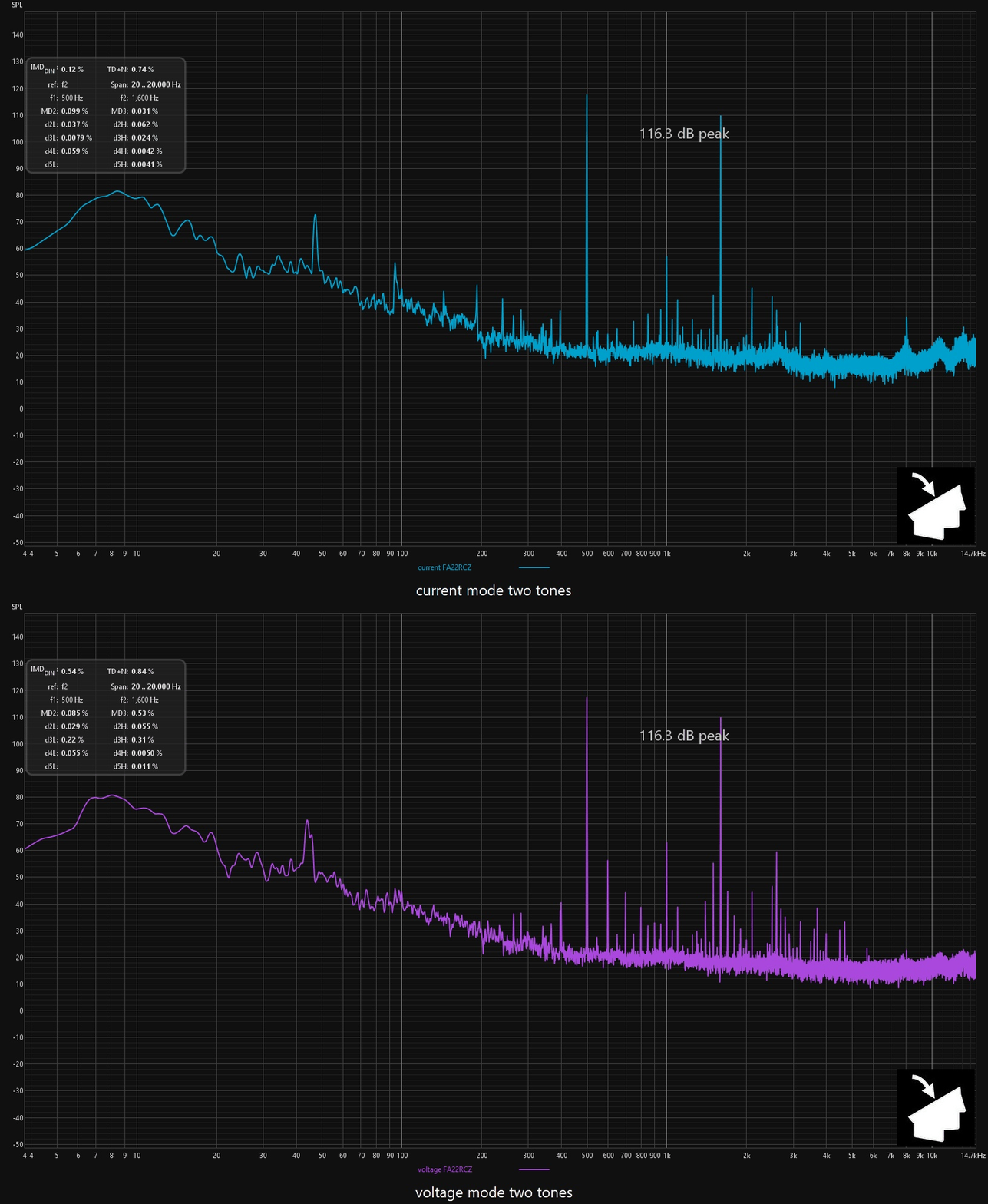
Two-Tone IMD
Intermodulation distortion comparison. The forest of spurious tones under voltage drive disappears with current drive.
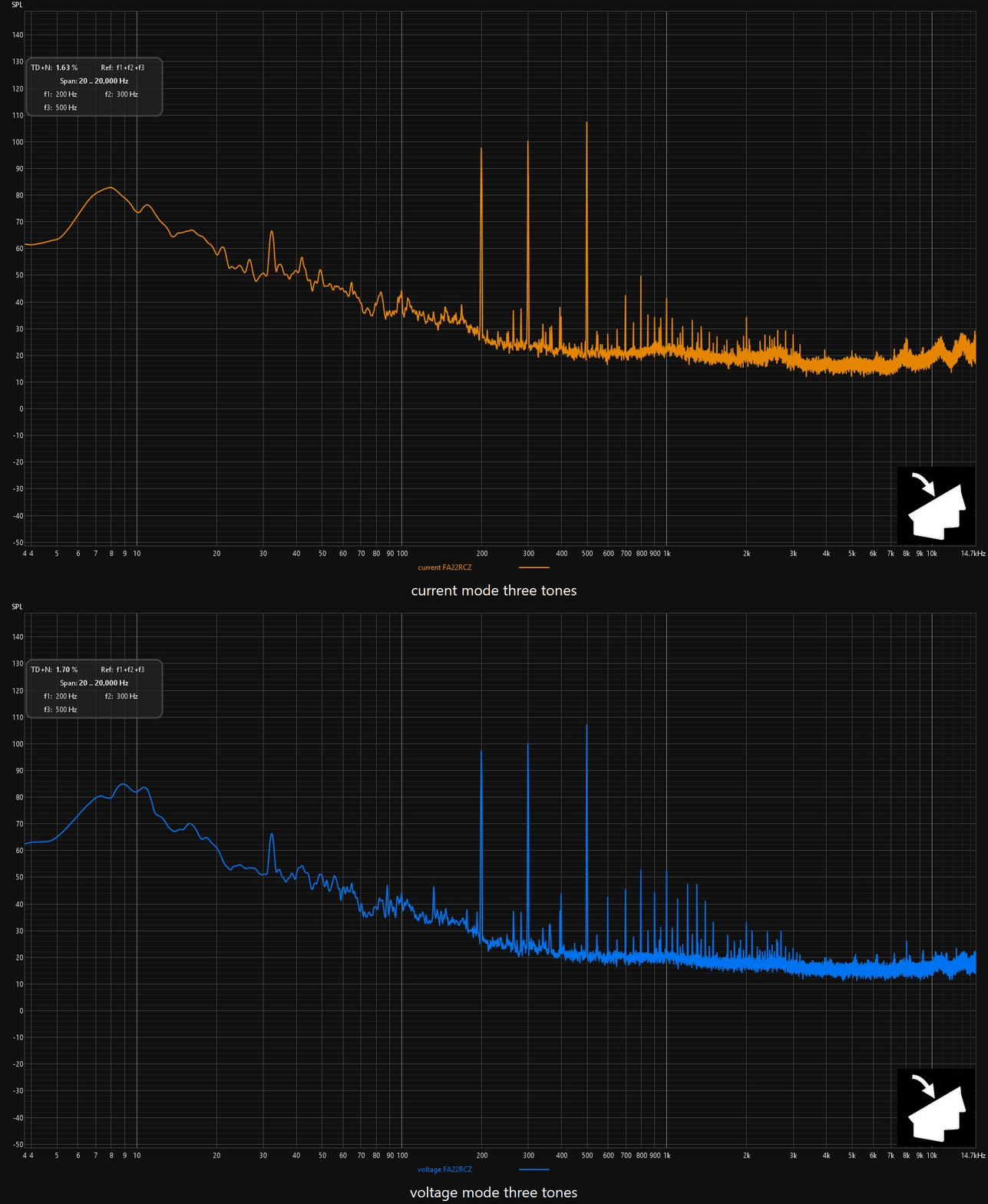
Three-Tone IMD
Yet another three tone measurement.
The Verdict
Across 3 different drivers, 12 different test conditions, and SPL levels from 94 to 104 dB — current drive consistently reduces total harmonic distortion by 10 dB or more. This isn't theory. This is measured.
The Baffless Mixed-Mode Current Drive Amplifier gives you 3 switchable modes — voltage, and two mixed modes — starting at €250.