
Dipole Loudspeakers
Open baffle 20Hz–20kHz. No cabinet. No coloration. Every driver operates as a true point-source dipole.
A dipole radiates equally forwards and backwards and has a null at the sides, and it keeps that pattern at every frequency. A box loudspeaker does not: at low frequencies it radiates in all directions, and it only becomes directional higher up, once the baffle and the driver are large compared with the wavelength. Its polar pattern — and with it the amount and the spectral balance of the energy it puts into the room — changes as frequency rises.
That matters because in a room you hear the direct sound plus the reflections that follow it. Floyd Toole, Sean Olive and other researchers found that listener preference ratings are consistently higher for loudspeakers with a uniform polar pattern: the reflected sound then carries the same spectral balance as the direct sound, instead of being a coloured copy of it.
Every driver a point source
The Baffless system is a 4-way design in which each driver works only around its first dipole peak — the range where its baffle is still small compared with the wavelength being reproduced. Each driver therefore behaves as a true acoustic point source and keeps a proper figure-of-eight pattern. An open baffle wider than the wavelength stops being a dipole: the pattern breaks up, off-axis response becomes frequency-dependent, and the power radiated into the room no longer tracks the direct sound. That is why there is only the bare minimum of material around each driver.
Measured directivity
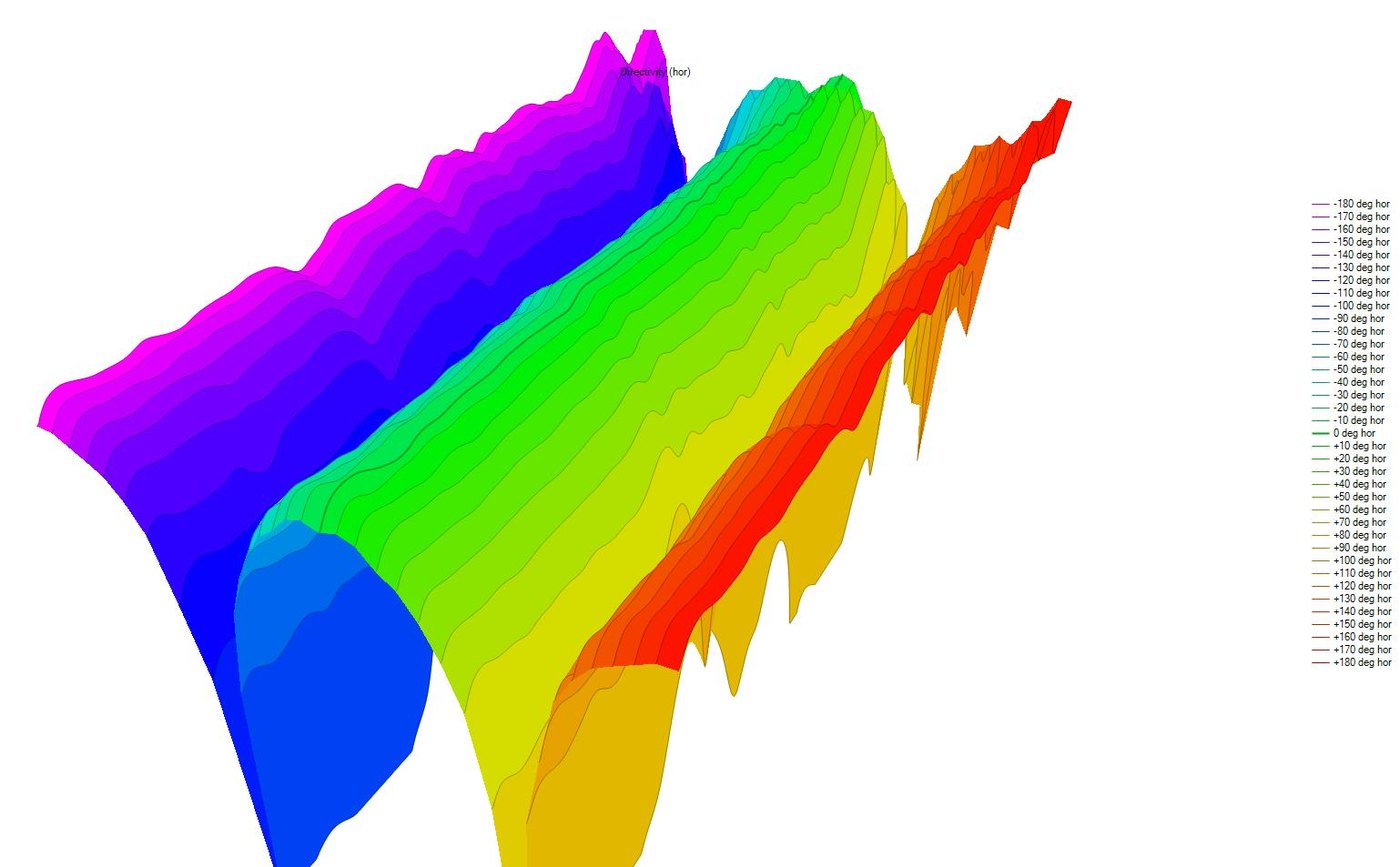
Measured directivity in free field, 20 Hz–20 kHz, with frequency-dependent windowing at 1/6.9-octave resolution. One trace per horizontal angle, −180° to +180°; the valleys are the ±90° directions, where the system radiates virtually nothing.
From 20 Hz to 5 kHz the measured directivity index stays between 4.6 and 6.3 dB — a textbook dipole is 4.8 dB. Higher up it stops being a plain figure-of-eight: around 7–9 kHz the pattern widens and the index falls to 3.0–3.3 dB, and from 12 kHz upwards the main lobe narrows and side lobes appear, taking the index to 7.6 dB at 12 kHz and 10.2 dB at 20 kHz — the range where the driver itself is large compared with the wavelength. What does not change is the front-to-back symmetry: the rear lobe stays comparable to the front one all the way to 20 kHz.
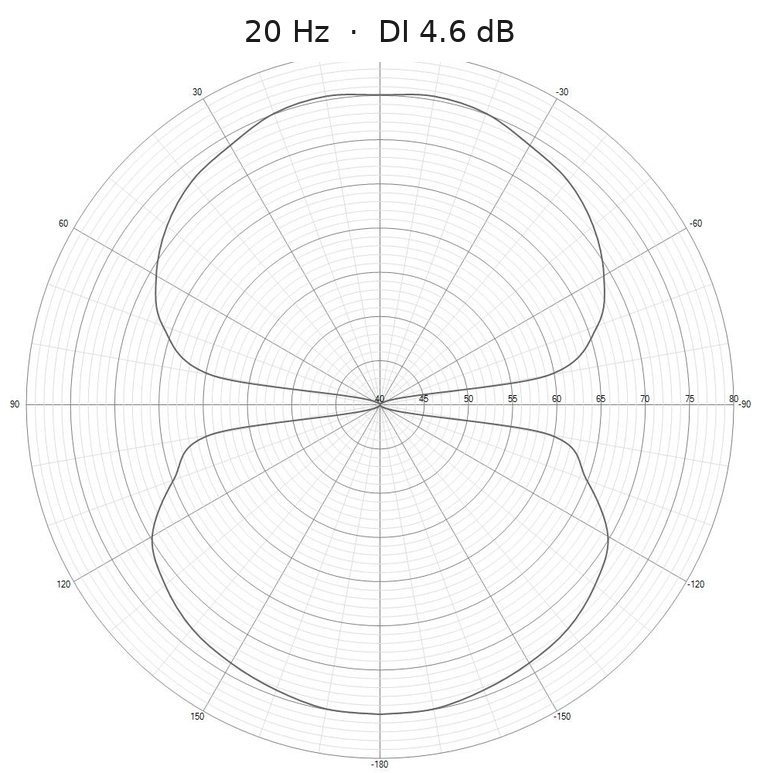
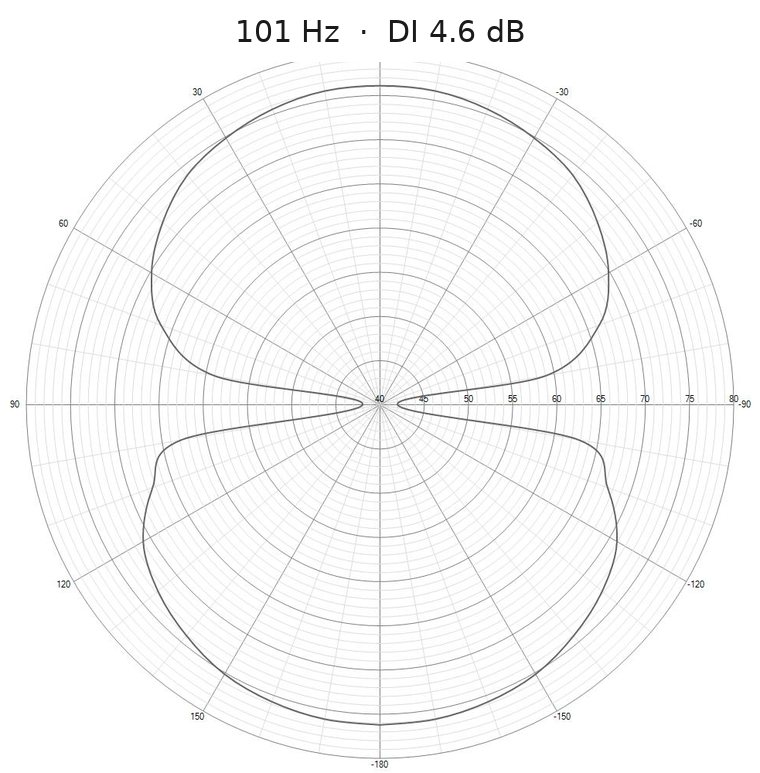
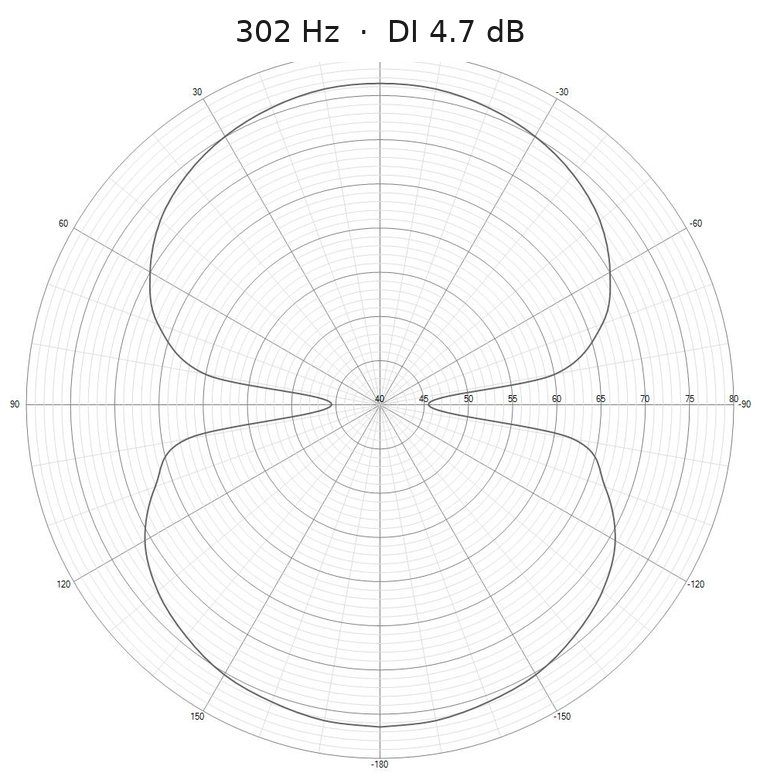
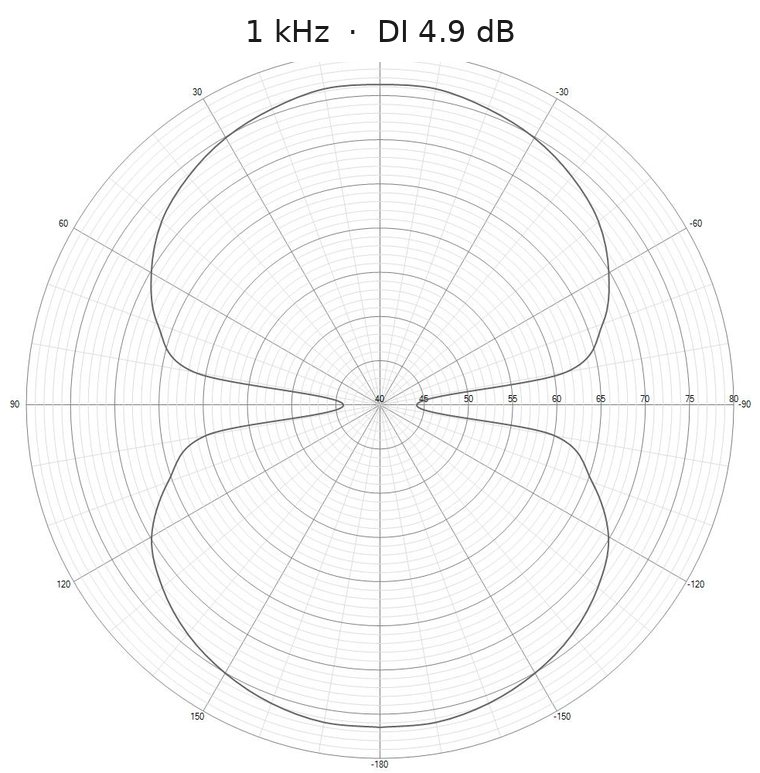
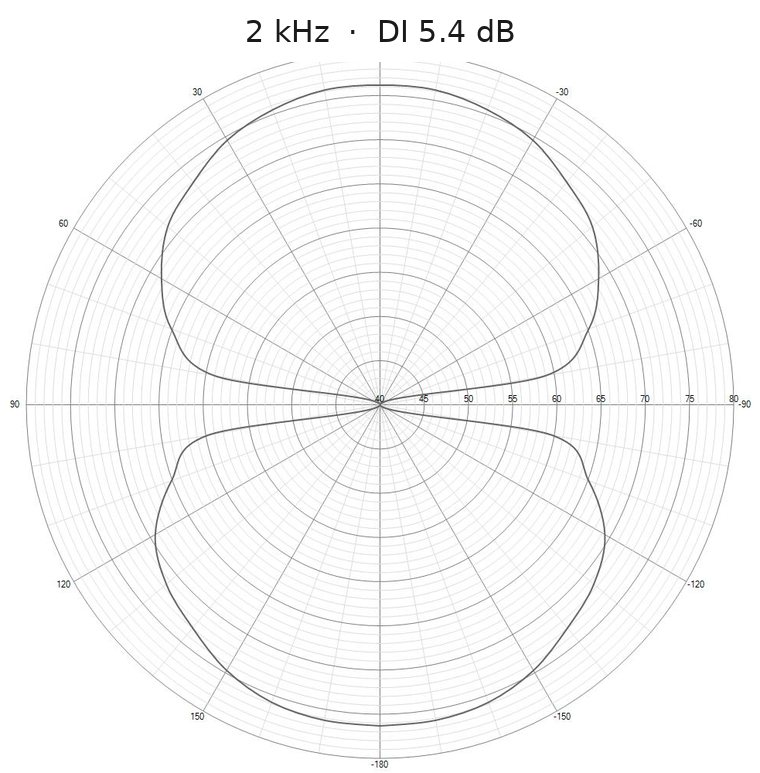
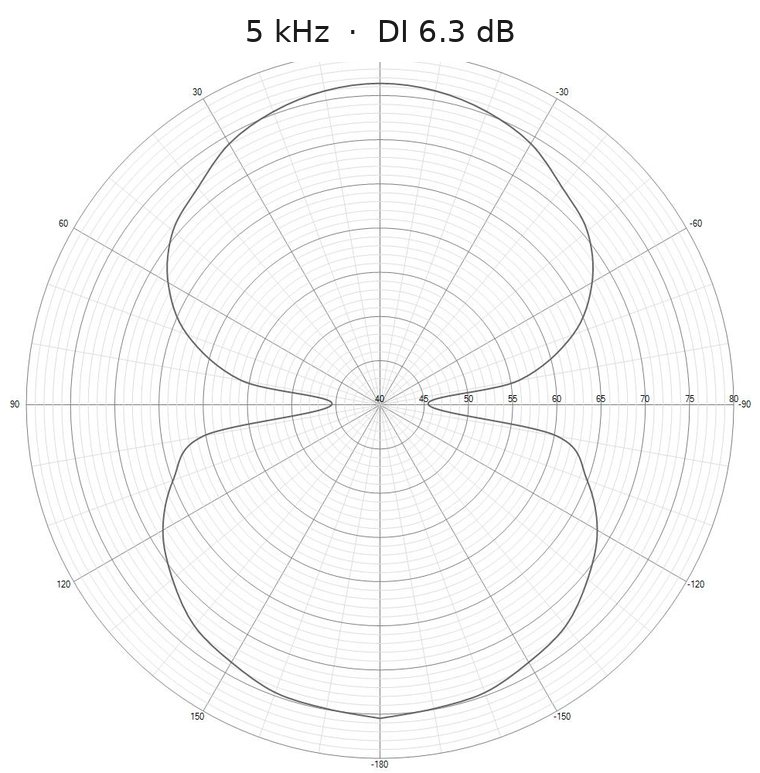
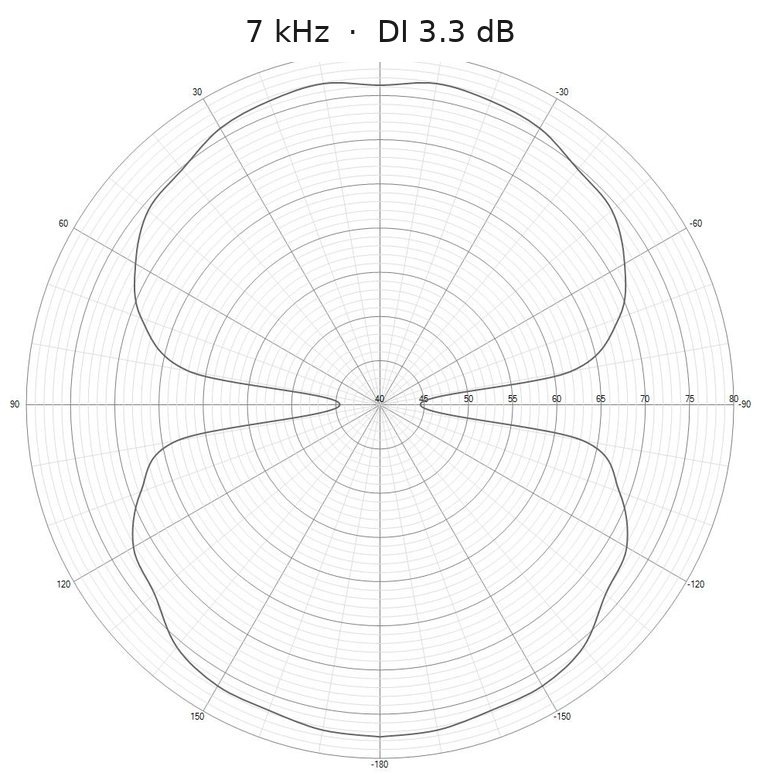
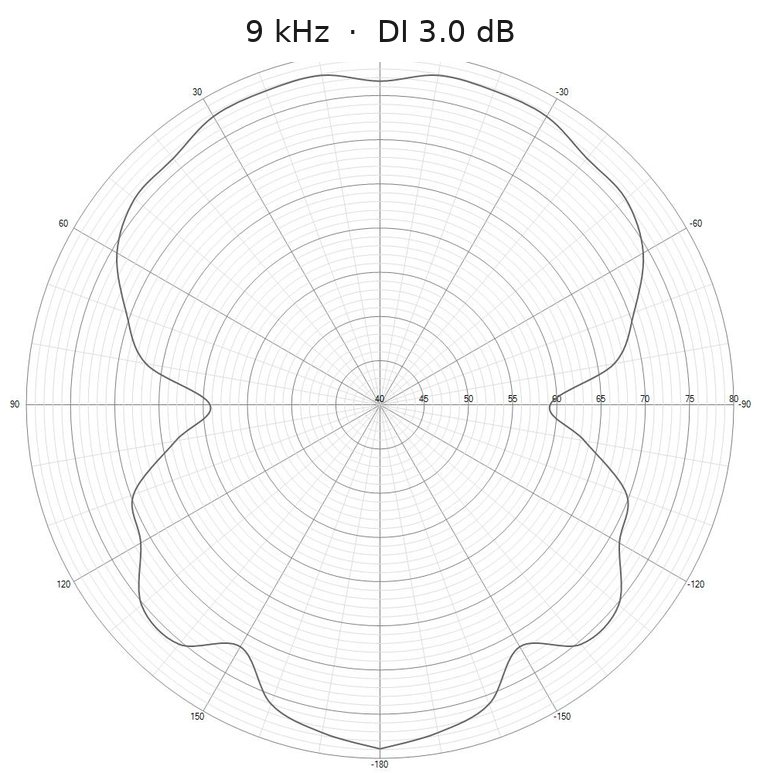
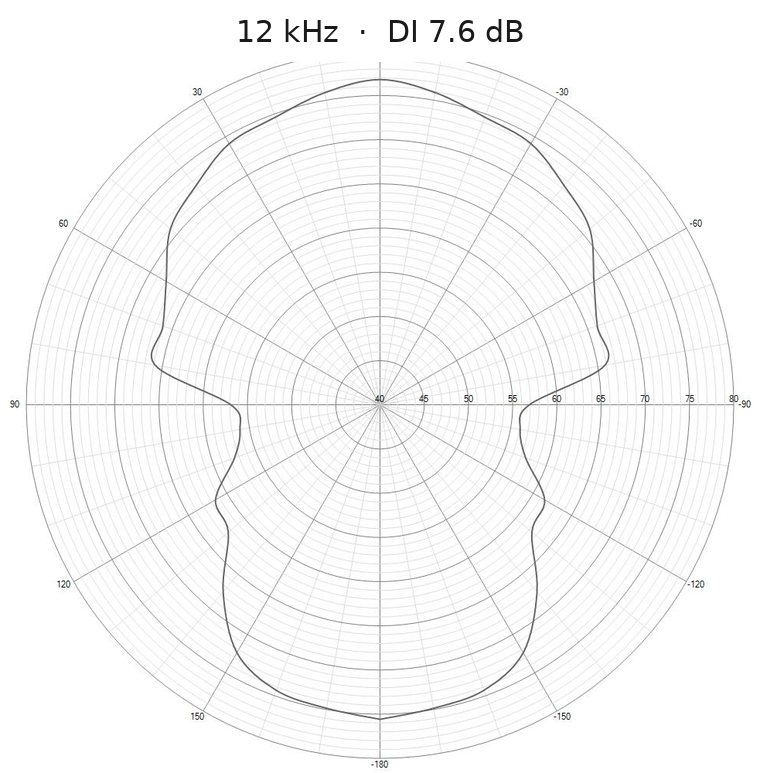
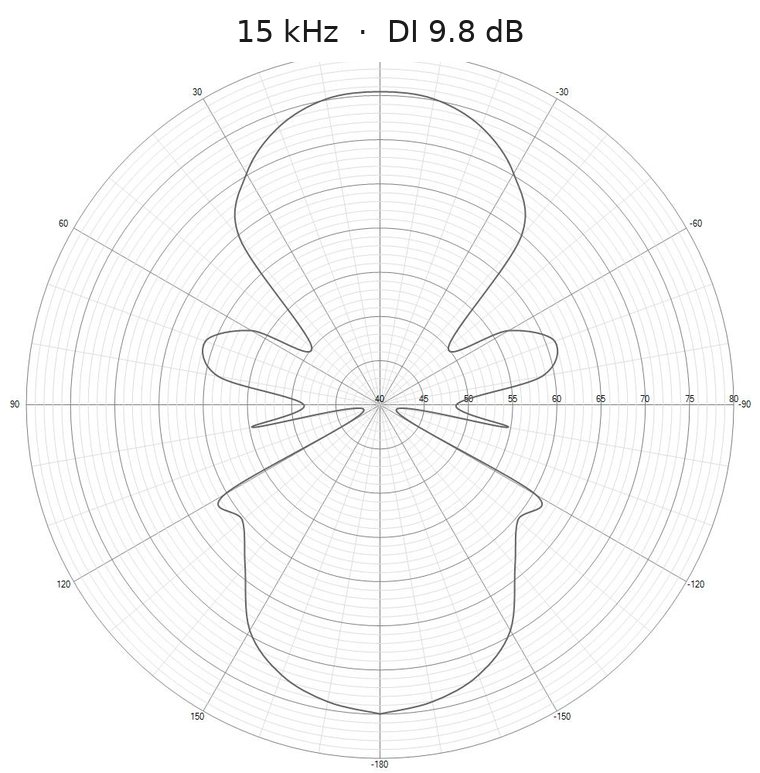
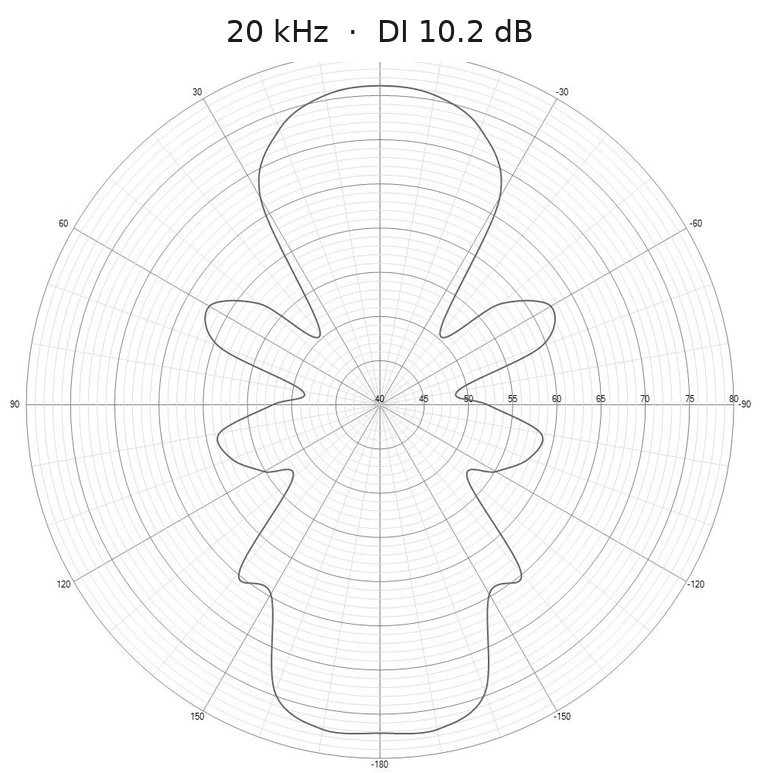
Measured horizontal polar response at eleven frequencies from 20 Hz to 20 kHz, free field, each plot labelled with its directivity index. The figure-of-eight and its ± 90° nulls hold from 20 Hz through the midrange; above 7 kHz the lobe structure becomes finer, but the system is still radiating as a dipole at 20 kHz.
Dipole all the way, including the bass
The Baffless system is dipole across the entire frequency range — from 20 Hz to 20 kHz. This is unusual. Most open baffle designs use a conventional box for bass and go dipole only for mid and high frequencies.
Dipole bass is inefficient, and maximum SPL will not compete with a monopole — but in a normal-sized room that is rarely the limiting factor, and it is exactly in small rooms that dipole bass is the cleaner of the two. It is more articulated, because a source with nulls at its sides couples far more weakly to the room's modes. Elias Pekonen's modulation-transfer analysis of dipole versus monopole bass shows the mechanism behind why it sounds so natural.
The same nulls change what the room contributes overall. With virtually no output at ±90°, side-wall reflections and the modes those walls support are simply not driven. The wall behind the speakers becomes the surface that matters, and its delayed reflection adds a sense of space rather than smearing the stereo image.