
Dev AMP
A development amplifier for comparing how different output impedances sound — not a product, a decision tool.
Dev AMP means development amplifier. It is a project I have not seen anything close to. It is unique not because uniqueness was the goal, but because a fair way was needed to evaluate how amplifiers with different output impedances sound.
A short background:
- Usually all amplifiers are voltage drive. Vin → Vout. Old-school, easy and simple.
- Next, current drive: very high output impedance, Vin → Iout. People say this is complicated to build. In reality it is easy.
- Next, mixed mode: voltage drive at low frequencies, current drive at high frequencies. A little more complicated, not that hard.
- Next, negative output impedance at the driver’s resonant frequency and high impedance at high frequencies — or any other shape where output impedance starts and stops with frequency. That gets difficult once the turnover frequencies have to be adjustable.
- Then do all of that with the turnover frequencies adjustable, and switch modes on the go with one touch on a phone: voltage, current drive, mixed mode, with negative impedance or without. Any configuration. Support drivers from subwoofers to tweeters to full-range. Keep stability margins safe. Let output impedance vary over a wide range. Keep the circuit as small and cheap as possible. Keep the noise floor close to 20 dBA µVrms — around >120 dBA dynamic range with the on-board DAC. That is a hard task.
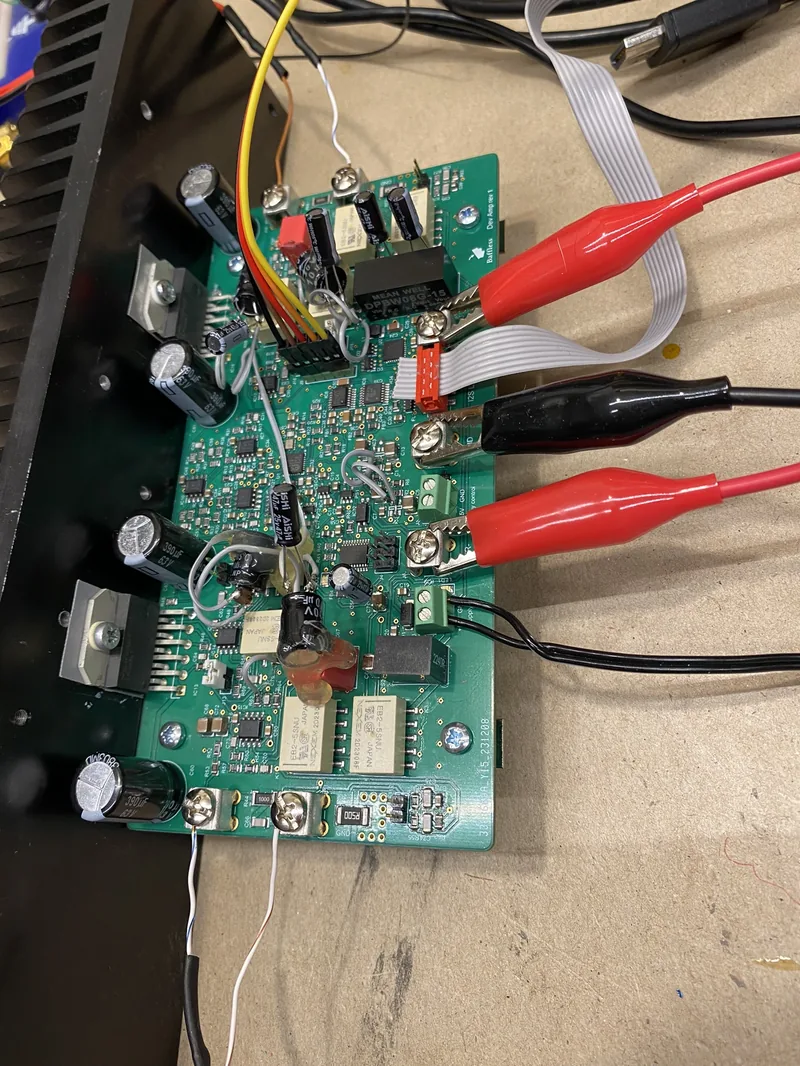
Simulations of two possible circuits are done. The amplifier is built to compare the sound. Negative-output-impedance and current-drive already show interesting differences when they are equalised to the same response. Dev AMP exists to test and explore the configurations on the go, all equalised to the same response. Common sense says negative impedance at resonance and high impedance at high frequencies could be best — but that has to be heard before committing to a simpler product circuit that has to work with every driver.
Dev AMP is not a product technology. It is how to decide what technology to build. The measurements and listening that come out of it feed the current-drive amplifier and the current-drive notes.
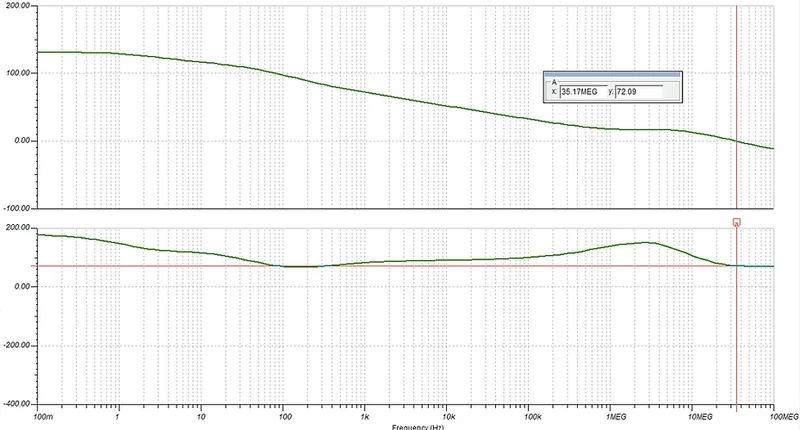
Pic. 1 — Phase margin of Dev AMP in one working mode.
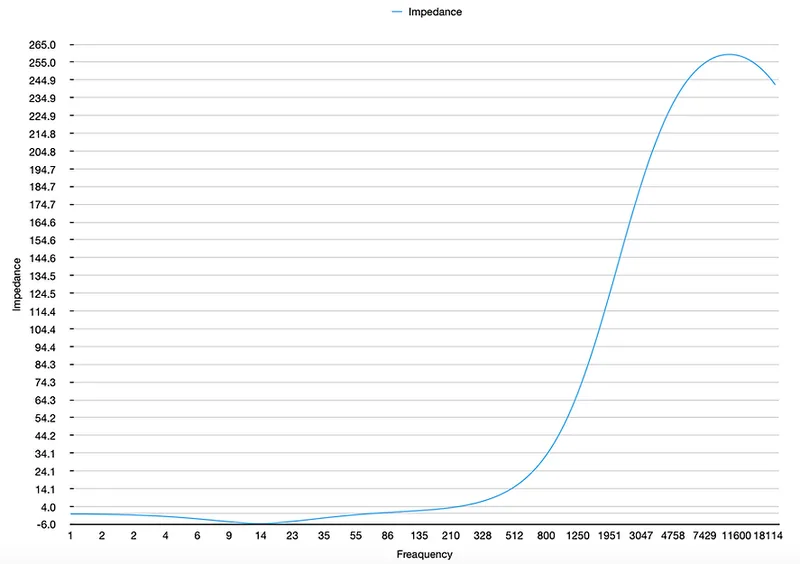
Pic. 2 — Example output impedance versus frequency in one working mode.