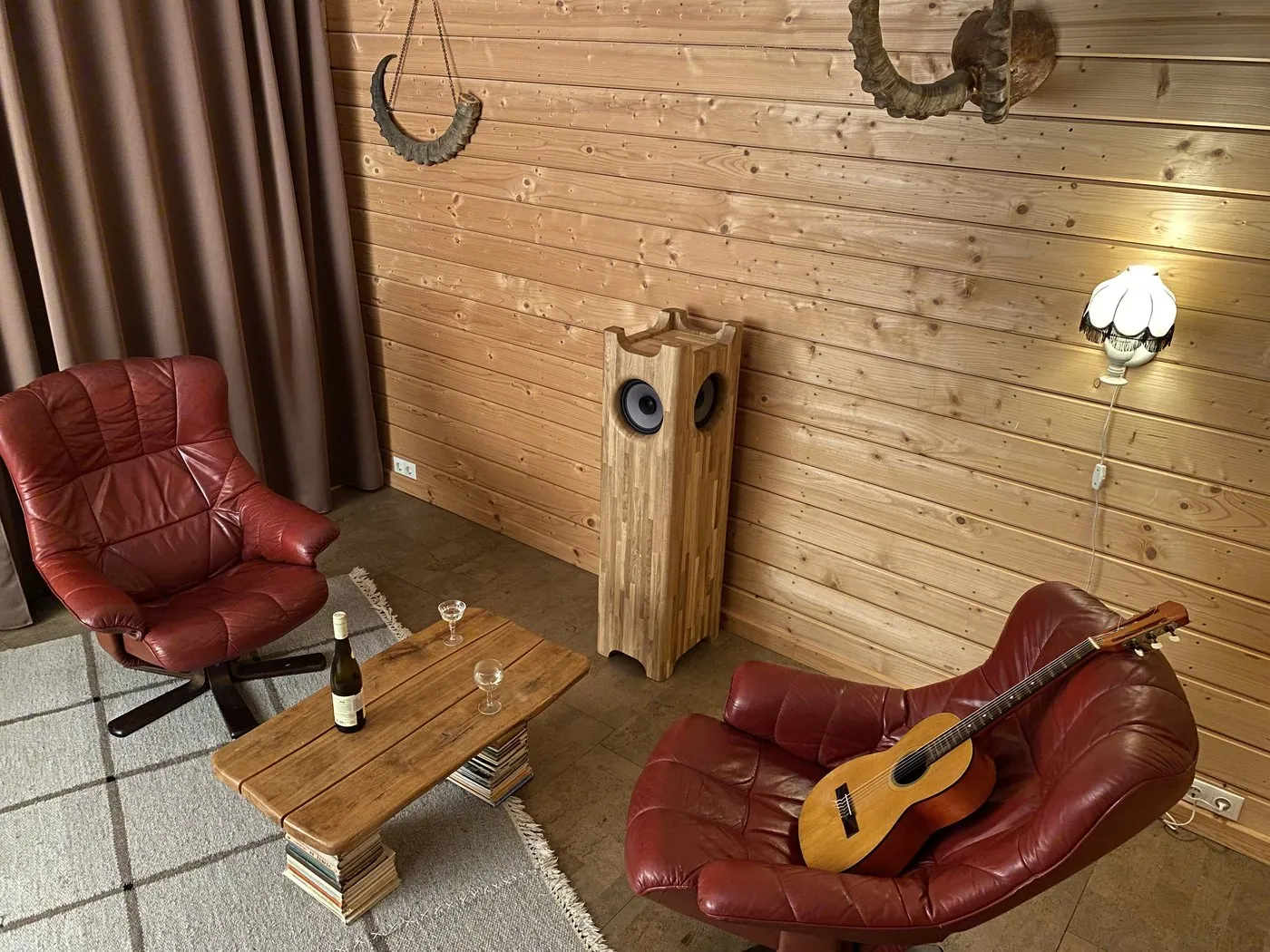
Single Speaker Stereo
Stereo from one enclosure through three full-range drivers, DSP beam steering and room reflections.
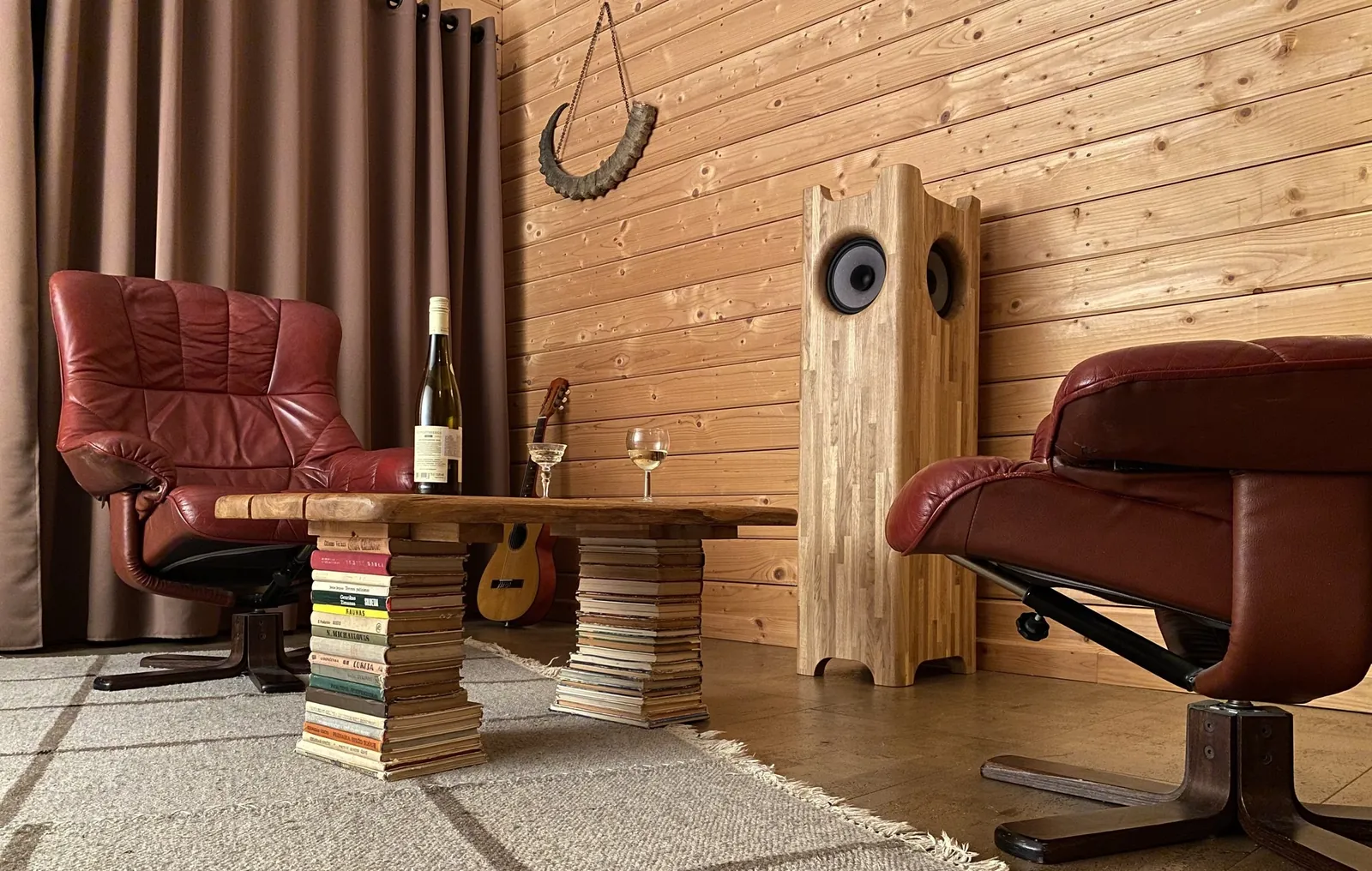
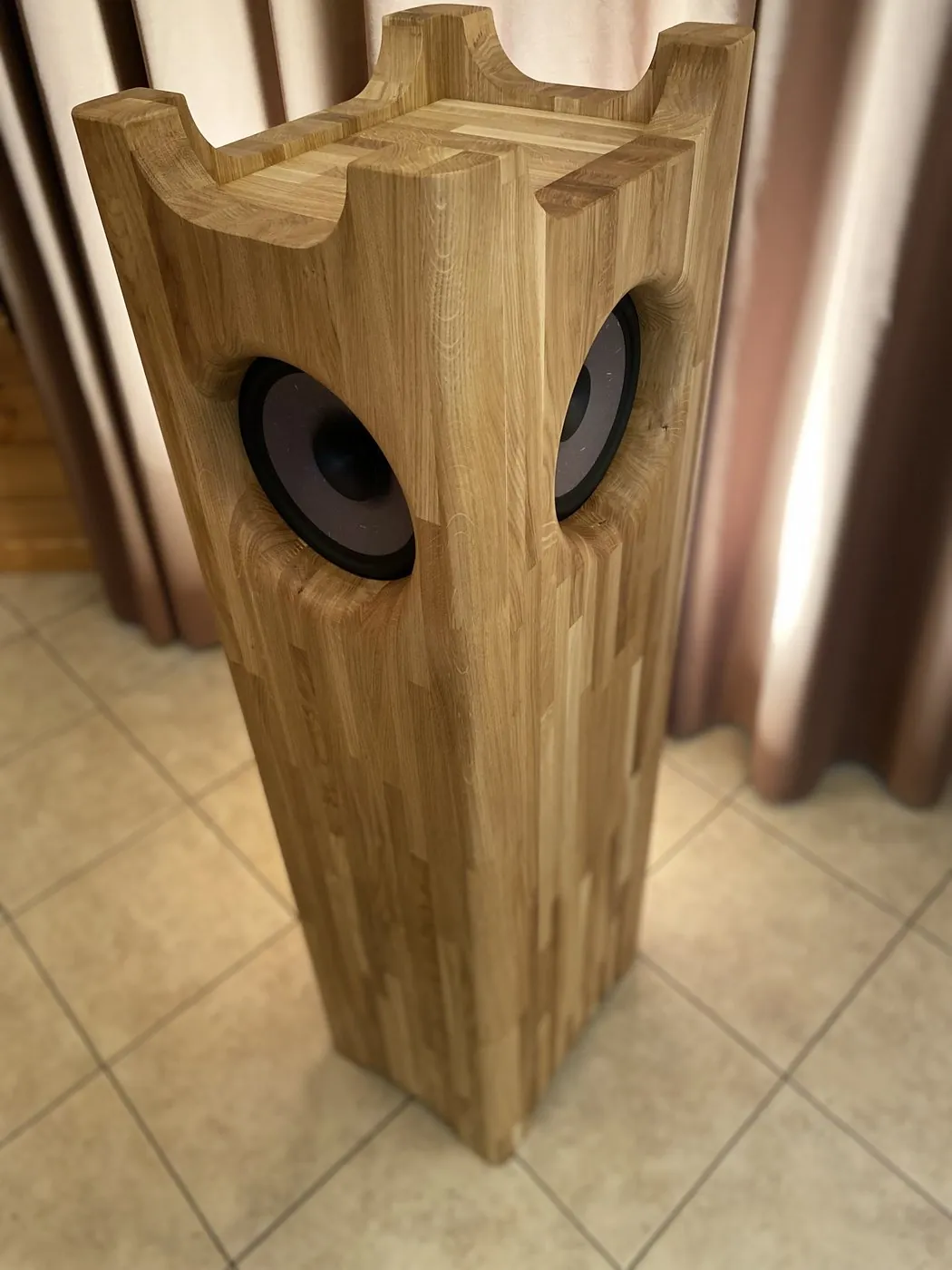
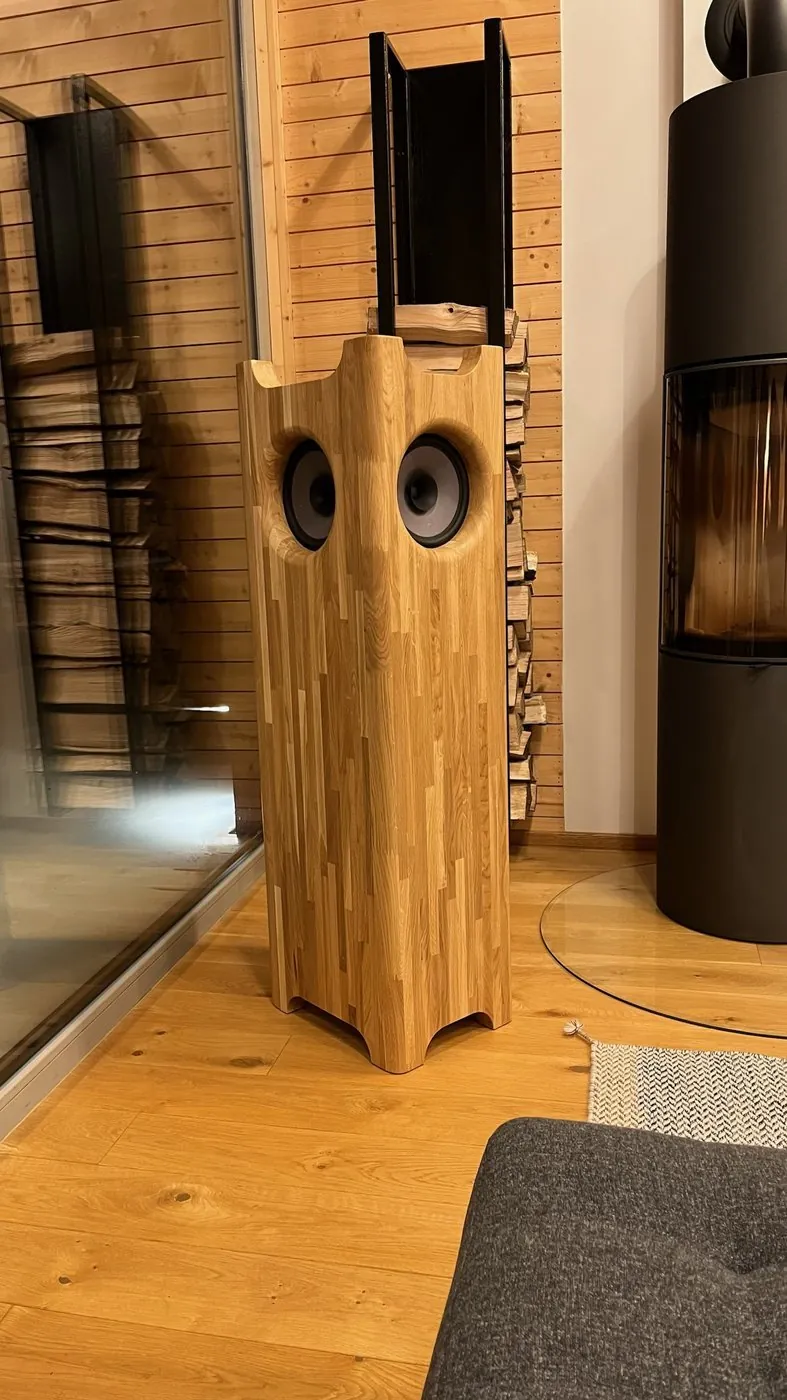
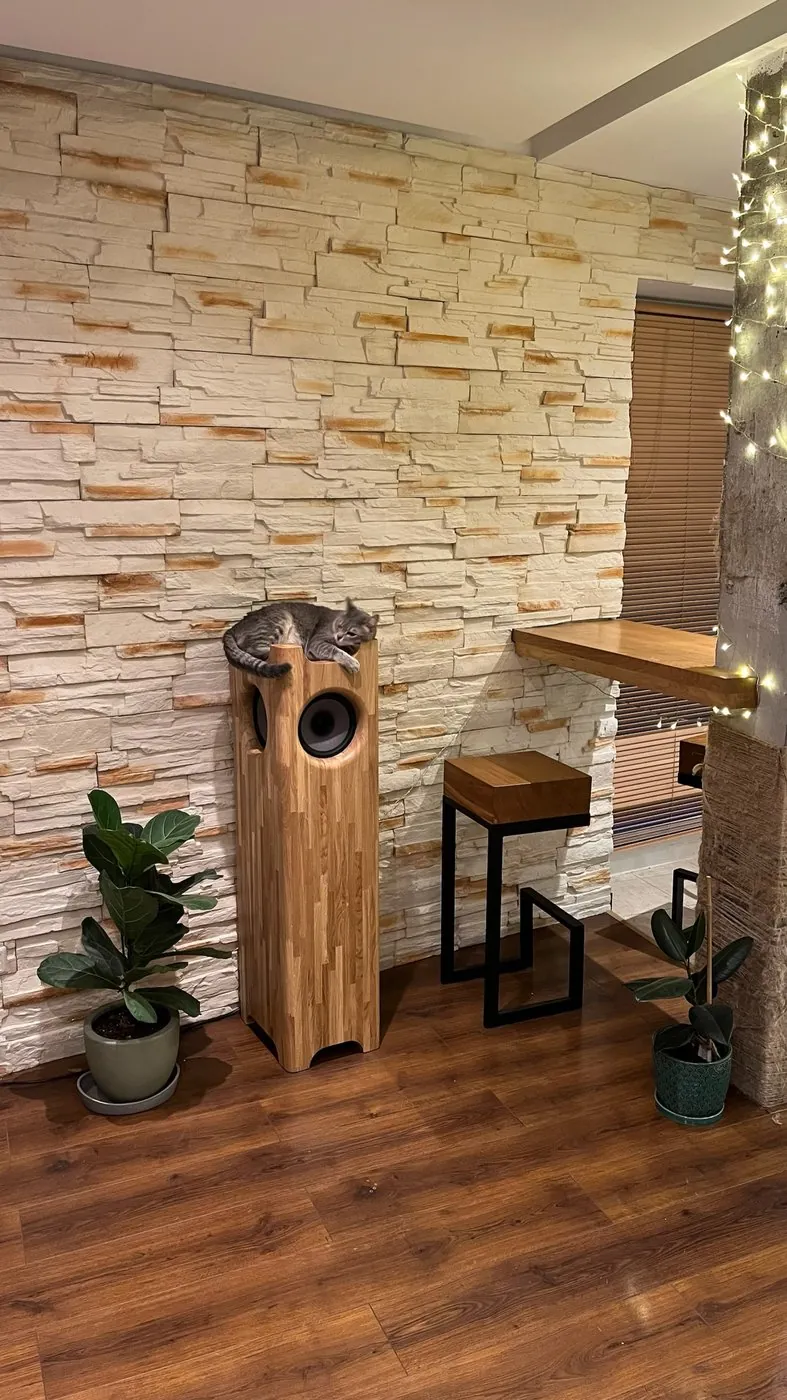
Single Speaker Stereo (SSS) produces stereo from one physical enclosure. The build shown here places three identical full-range drivers around a solid-oak body, giving DSP control over how the shared and different parts of the left and right channels leave the cabinet.
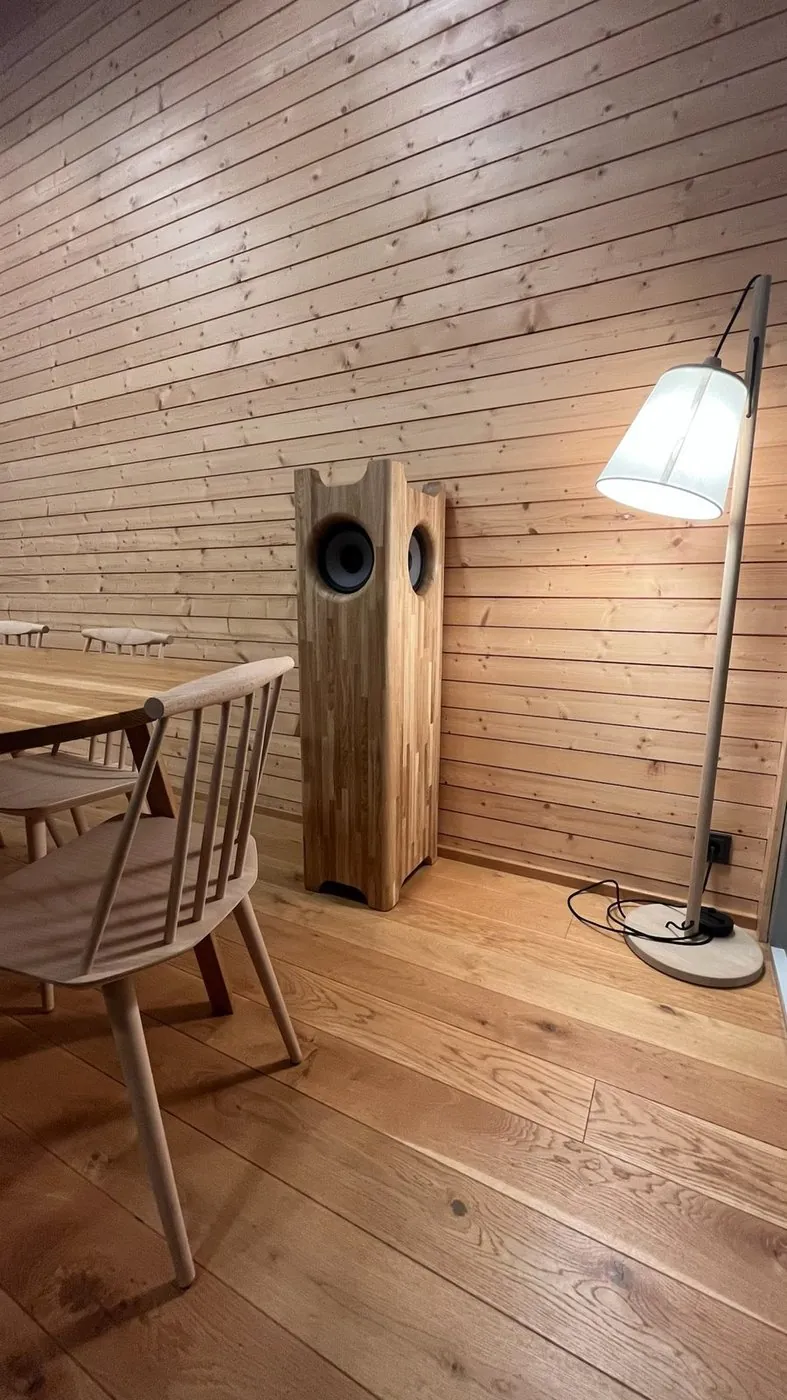
The room is part of the system. Sound carrying lateral information is deliberately directed toward the side walls, while central information reaches the listener more directly. The returning reflections help create left/right spatial cues from a single loudspeaker position.
This is a different presentation from a conventional two-speaker pair, not a smaller version of one. At its best the speaker itself disappears: voices and instruments detach from the enclosure, and with some recordings the three-dimensional effect is remarkable. The strength and shape of that effect depend on the room, the listening position and the recording itself.
A different principle: SSS uses beam steering, mid/side processing and room reflections. It does not use the crosstalk-cancellation method employed by the Baffless Dipole System.
How It Works
The DSP separates the incoming stereo signal into Mid information shared by both channels and Side information describing their differences. It then feeds different combinations, gains and polarities to the three drivers. Shared content remains coherent around the enclosure, while side information is weighted toward the lateral radiation paths.
The walls return that lateral energy to the listening area. Because all sound leaves one point in space, there is no phantom centre formed between two cabinets and no conflicting arrival times from separate boxes. In exchange, wall distance and absorption become part of the system, so room symmetry and speaker placement matter more here than they do for a conventional network speaker.
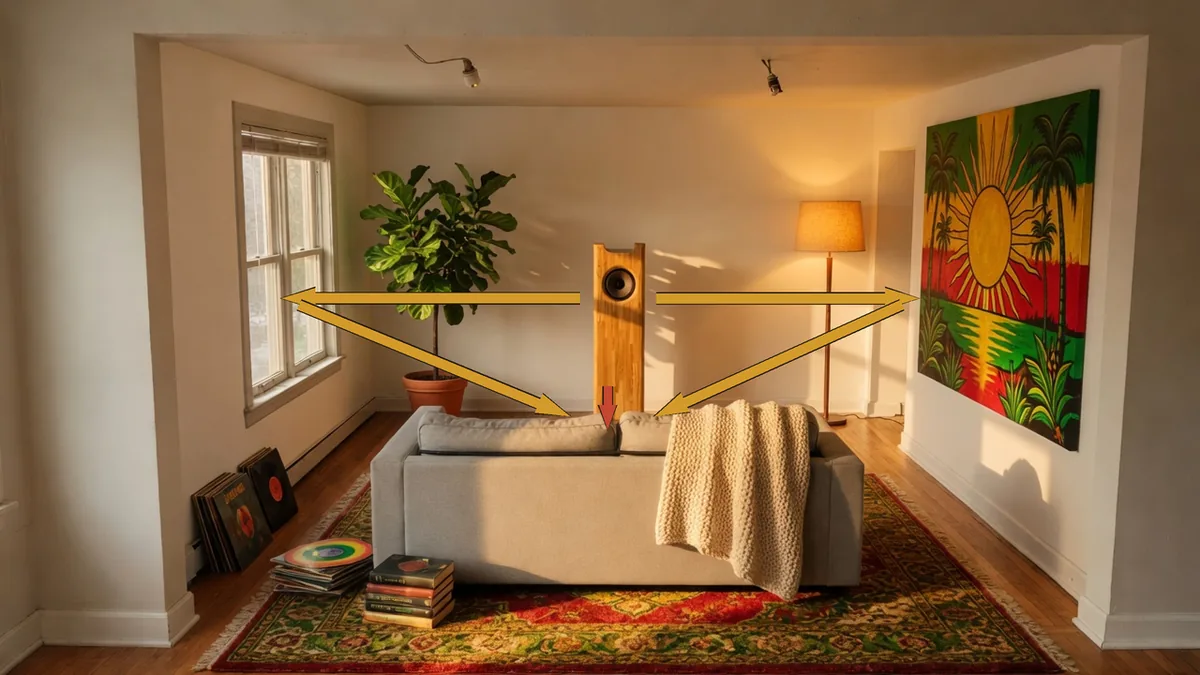
Direct path (red) carries the mid information; the lateral beams (gold) reach the listener only after reflecting off the side walls.
An Integrated System
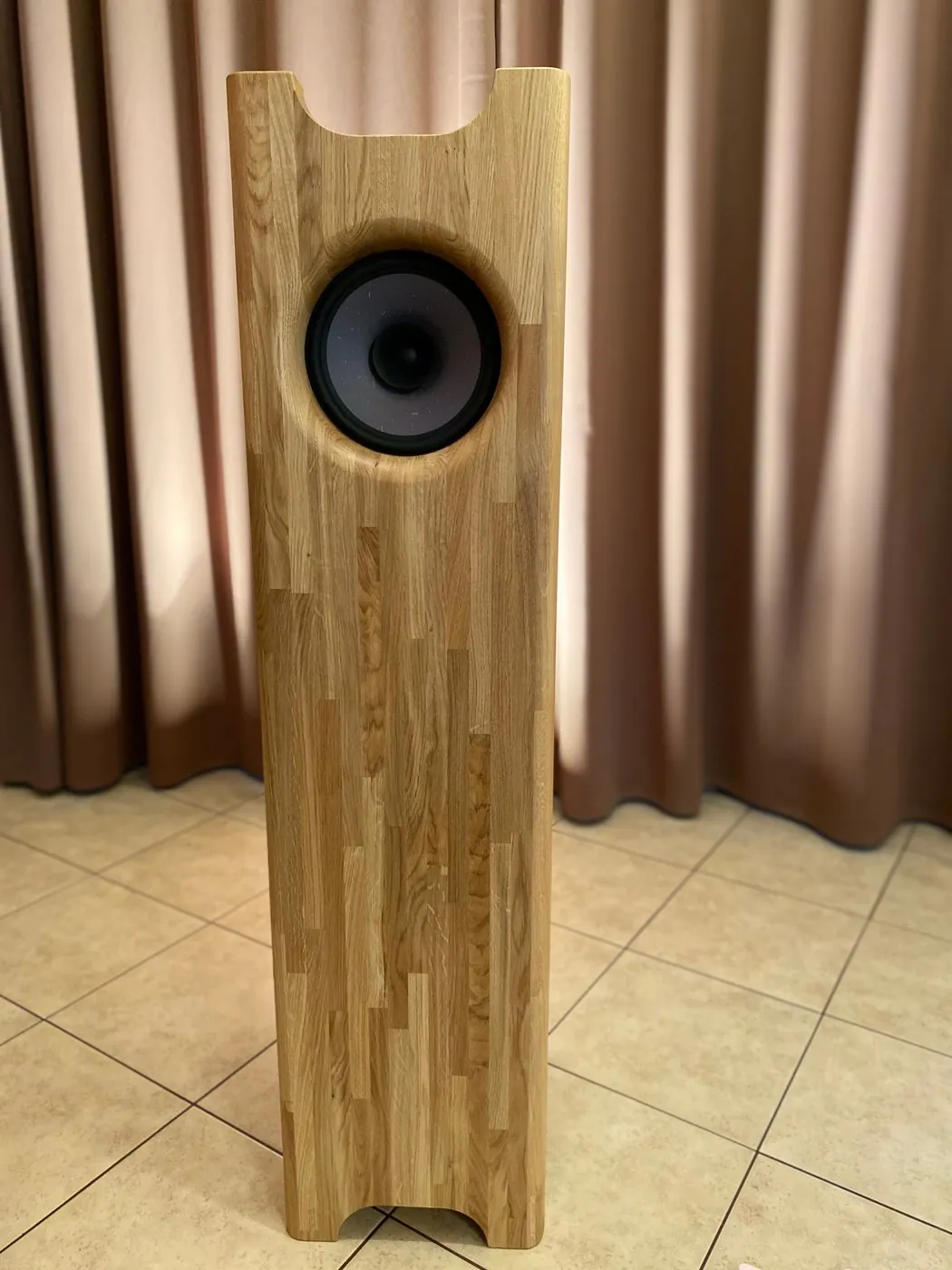
The SSS build shown on this page was developed as a complete active system rather than a passive speaker. Its signal processing, conversion, amplification, drivers and enclosure were designed together. It is now a system concept and custom-development path, not a standard off-the-shelf product.
A mixed-mode Baffless amplifier/DAC board used current drive across most of the band and voltage drive for the lowest frequencies.
The architecture was fully active, with DSP routing and no passive crossover between the amplifiers and full-range drivers.
The shown enclosure was made from oil-finished solid oak and weighed approximately 50 kg with its electronics installed.
The earlier complete build supported AirPlay, DLNA and Roon over Wi-Fi or Ethernet, with a web interface and automatic sleep/wake.
Compared With a Conventional Stereo Pair
One cabinet replaces two, so the system takes less floor space and there is no left/right pair to align with each other. That is where the useful comparison ends. Single Speaker Stereo cannot replace a conventional stereo pair, and a conventional pair cannot replace it. The presentation is genuinely different — not worse, different — and each approach does something the other cannot.
A conventional stereo pair can still be pressed into service around a television, and many are. Single Speaker Stereo cannot: a screen sitting where the stereo image is supposed to form defeats the whole principle. It is meant for listening in a home where the television is simply not let into that room. SSS is a music lover's system, not living-room entertainment.
Where the Concept Comes From
Producing stereo from a single enclosure is an old idea; this implementation is not. The nearest commercial relative is the Stereolith design, and there is published DIY work on the principle by Elias. What is specific to Baffless is the driver wiring, the mixed-mode current drive and the frequency-dependent mid/side processing — those are described on the technical detail page.
Living With It
The complete build is plug and play: one power cord, nothing else. It powered itself on and off automatically for streaming, and its three main operating modes were selected from the speaker's own web interface. Full operating instructions for that model are archived in the old user manual below.
Because the effect depends on the room, an audition somewhere else proves very little. The workshop is in Vilnius, Lithuania, but listening should ideally happen in your own room — get in touch before anything else.
Archived instructions for the earlier self-contained SSS model. This is not a current off-the-shelf product manual.
Gallery